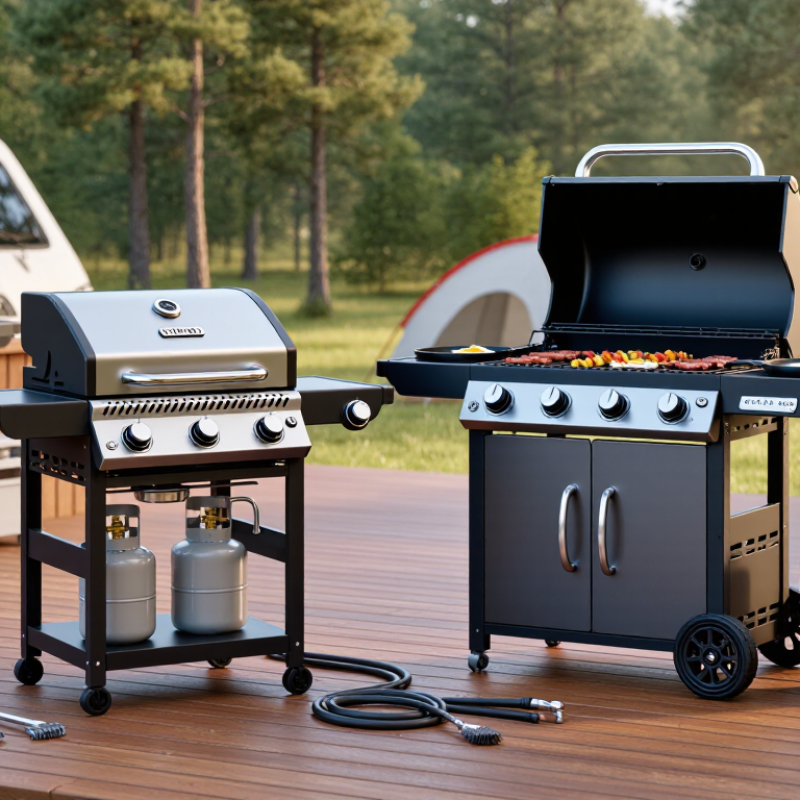
| Portable LPG Tabletop Grill | Propane Butane
Commonly supplied through small cylinders or screw-on cartridges. | Approximately 2.0–4.5 kW for compact outdoor models | Car camping, picnics, balconies where permitted, short outdoor cooking sessions, and small groups. | Performs well in warm and moderate climates. Propane is generally more suitable than butane for cool conditions because propane boils at approximately −42°C, while n-butane boils at approximately −0.5°C. | Check local cartridge or cylinder availability, valve type, connector thread, refill rules, and whether the fuel container can be transported legally. | Lightweight, quick start-up, simple heat control, and easy storage. | Small cooking area; wind can reduce efficiency; disposable cartridges may create waste; not all models accept both propane and butane. | Verify the appliance category, approved gas pressure, hose and regulator specification, leak-test instructions, and the destination-market gas-appliance requirements. Potential reference frameworks include EN 498, Regulation (EU) 2016/426 where applicable, UK requirements, ANSI Z21.58/CSA 1.6, or AS/NZS requirements. | Strong all-round option for international retail because the format is compact and fuel options are widely recognized, provided the connector and certification package are adapted by market. |
| Portable LPG Grill with Folding Cart | Propane LPG
Usually connected to a refillable cylinder. | Approximately 3.5–8.0 kW | Family camping, tailgating, recreational vehicles, and longer outdoor cooking sessions. | Suitable for warm, temperate, and cool climates when propane or an appropriate propane-rich LPG blend is available. Performance may decline if the cylinder is nearly empty, heavily chilled, or exposed to extreme cold. | Confirm cylinder dimensions, local refill or exchange systems, regulator outlet pressure, hose length, and compatibility with the destination country’s cylinder valves. | Larger cooking surface, better working height, improved stability, and greater fuel capacity than tabletop units. | Heavier and less compact; cylinders require secure upright storage and safe transport. | Check burner, hose, regulator, cylinder compartment, flame-failure protection where required, stability, and outdoor-use labeling. Standards and legal requirements differ by destination market. | One of the most practical 2026 formats for buyers prioritizing cooking capacity and repeat use over minimum pack size. |
| Compact Two-Burner LPG Camping Cooker-Grill | Propane Butane LPG | Approximately 3.0–7.0 kW combined | Cooking with pots and pans as well as grilling; suitable for family camping and base camps. | Good flexibility in moderate climates. A two-burner layout is useful in windy or changeable weather when fitted with effective wind protection and used on a stable surface. | Fuel availability is generally good, but buyers must match the appliance to the correct pressure regulator and fuel category. Multi-fuel claims require separate verification. | Combines grilling and boiling; offers independent heat zones; useful for meals requiring simultaneous cooking. | More components to maintain; wind shields can become hot; larger footprint than a single-burner grill. | Confirm burner-control safety, pan-support stability, hose and regulator approvals, ventilation instructions, and whether the product is classified as a barbecue, cooker, or both in the target market. | High utility for global buyers seeking one appliance for varied outdoor cooking rather than grilling alone. |
| LPG Grill with Cast-Iron Grates | Propane LPG | Approximately 4.0–10.0 kW | Frequent camping, vehicle-based travel, and users who want strong searing performance. | Performs consistently in moderate climates. Cast iron retains heat well but may require more preheating and careful drying in humid or coastal environments. | Requires a reliable cylinder supply and enough fuel capacity for longer preheating. Fuel consumption should be assessed using input rating and planned operating time. | Good heat retention, strong searing capability, and durable cooking surface when properly maintained. | Heavy; can rust if the seasoning or protective coating is neglected; slower to cool and transport. | Inspect grate coating, food-contact materials, burner durability, thermal shielding, grease management, and stability testing. Certification does not replace safe-use instructions or local installation rules. | Suitable for premium outdoor cooking segments, but shipping weight, corrosion protection, and packaging durability are important commercial factors in 2026. |
| LPG Grill with Stainless-Steel Grates | Propane LPG | Approximately 3.5–9.0 kW | Coastal camping, humid regions, frequent transport, and buyers prioritizing easier cleaning. | Well suited to humid and coastal environments when the stainless-steel grade, weld quality, and burner materials are appropriate. Surface discoloration can still occur under harsh conditions. | Uses the same cylinder and regulator considerations as other LPG grills. Stainless components do not eliminate the need for dry storage and regular cleaning. | Generally lighter than cast iron, easier to clean, and less vulnerable to breakage during transport. | Heat retention may be lower than thick cast iron; thin or low-grade steel can warp or discolor. | Request material specifications, corrosion testing where offered, food-contact declarations, burner and hose compliance documents, and market-specific gas safety documentation. | A strong choice for export markets with humid climates, provided material claims are supported by traceable specifications rather than generic “stainless” wording. |
| Natural-Gas Portable Grill | Natural gas | Approximately 4.0–12.0 kW | Fixed campsites, organized recreational facilities, outdoor kitchens, and locations with an approved natural-gas connection. | Suitable across many climates when installed and operated according to local requirements. Outdoor use must account for wind, ventilation, and freezing conditions in the supply system. | Limited portability because a piped or approved site connection is required. Natural gas is not normally stored in small portable cylinders for ordinary camping use. | Continuous fuel supply at connected sites and no need to carry LPG cylinders. | Poor fit for remote camping; installation, pressure, connector, and site approval requirements can be complex. | Verify appliance gas category, inlet pressure, approved connector, installation instructions, local utility or site requirements, and applicable national gas-appliance certification. | Niche but valuable for fixed or semi-fixed camping infrastructure; not a general replacement for portable LPG equipment. |
| Dual-Fuel LPG and Natural-Gas Grill | Propane Natural gas | Approximately 4.0–12.0 kW, depending on configuration | Users moving between home, campsites, and connected outdoor facilities. | Climate performance depends on the selected fuel, regulator setup, and burner calibration. Switching fuel must follow the manufacturer’s approved conversion procedure. | Fuel flexibility is useful, but conversion parts, jets, regulators, labels, and instructions must be supplied for the specific destination market. | Greater fuel flexibility and broader use scenarios. | More complex design; incorrect conversion can create unsafe combustion, excessive carbon monoxide, or unstable flames. | Confirm that both fuel configurations are covered by the relevant certification or approval. Check conversion kits, injector markings, regulator pressure, testing records, and user instructions. | Attractive for multi-channel distribution, but compliance and after-sales support requirements are higher than for single-fuel products. |
| High-Altitude LPG Camping Grill | Propane LPG | Approximately 2.0–6.0 kW | Mountain camping, trekking base camps, and high-elevation vehicle travel. | LPG can be used at altitude, but reduced air density affects combustion and heat transfer. The product should provide clear altitude limitations and operating guidance; some appliances require derating or are not approved above a stated elevation. | Propane availability is often preferable in cold regions, but cylinder access can be limited in remote areas. Fuel must be transported and stored safely. | Better suitability for cold-weather and high-elevation use when specifically engineered and tested for those conditions. | Lower heating performance, longer cooking times, flame instability, and increased carbon-monoxide risk if used incorrectly or in enclosed spaces. | Check altitude limits, combustion testing, ventilation warnings, flame-failure protection, regulator performance, and instructions prohibiting indoor or tent use unless expressly approved. | A specialized 2026 segment; technical documentation and safety communication are more important than maximum burner output. |
| Wind-Resistant LPG Camping Grill | Propane LPG | Approximately 2.5–7.0 kW | Open fields, beaches, coastal campsites, and exposed outdoor locations. | Best for windy environments when wind shields are designed without blocking required combustion air or creating unsafe heat buildup. | Uses ordinary LPG supply systems, but fuel consumption may increase in cold or windy conditions because cooking takes longer. | Faster recovery from wind exposure, more stable flames, and improved cooking consistency. | Wind guards can become hot; poor designs may cause incomplete combustion or overheating of controls and nearby surfaces. | Look for burner-flame stability testing, ventilation provisions, heat-clearance instructions, surface-temperature assessment, and clear warnings against use in enclosed areas. | Particularly relevant to global buyers serving coastal and open-land markets; wind performance should be supported by test conditions, not only marketing language. |
| Cartridge-Top Gas Grill | Butane cartridge Propane cartridge | Approximately 1.5–3.5 kW | Ultra-portable travel, short cooking sessions, and emergency or backup outdoor use. | Most suitable for mild and warm climates. Butane cartridge performance can deteriorate near and below its boiling point, while cold weather also reduces vapor pressure and cooking output. | Cartridge standardization is critical. Buyers must verify local cartridge dimensions, locking mechanisms, valve type, and transport restrictions. | Very compact, low setup time, and convenient for occasional use. | Limited runtime and cooking area; cartridge availability varies significantly by country; incorrect cartridge installation can be hazardous. | Verify cartridge-retention design, automatic shutoff or excess-flow protection where applicable, leak testing, labeling, and destination-market requirements for portable gas appliances. | Useful for convenience-oriented markets, but connector compatibility and cartridge supply are decisive import factors in 2026. |
| Hybrid Gas and Solid-Fuel Grill | LPG Charcoal or wood | Gas side typically approximately 3.0–8.0 kW | Users who want gas convenience but also use charcoal or wood where permitted. | Gas operation is more predictable in wet weather than solid fuel, but charcoal or wood use may be restricted during drought, wildfire-risk periods, or in protected areas. | Requires access to both gas and approved solid fuel. Local fire regulations may prohibit open-flame or solid-fuel cooking even when gas use is allowed. | Offers flavor and fuel-choice flexibility. | Heavier, more difficult to clean, and subject to additional fire, ash, smoke, and carbon-monoxide risks. | Check separate instructions and testing for gas and solid-fuel modes, grease-fire controls, heat shielding, ash containment, and local outdoor-fire restrictions. | Suitable for specialized outdoor-lifestyle channels, but regulatory and operational complexity is higher than for gas-only grills. |