| Product and application fit |
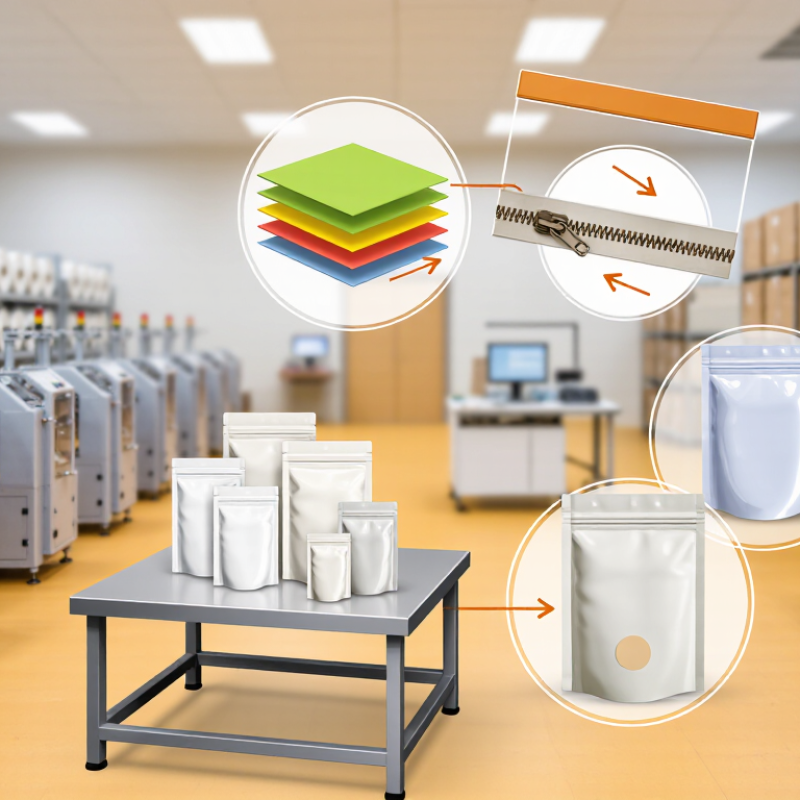
Confirm pouch dimensions, gusset, filling method, product type, storage conditions, and required features such as a zipper, spout, or tear notch. |
A written specification and a sample suitable for your actual filling and use conditions. |
A recommendation based only on a product photo, without clarifying contents or filling equipment. |
| Material structure |
Request the layer structure, material types, thickness, and intended barrier properties. Match these to moisture, oxygen, light, aroma, and puncture requirements. |
A documented material specification; barrier requirements should be defined for the product and storage conditions rather than assumed from appearance. |
Vague descriptions such as “high barrier” with no material details or supporting test information. |
| Food-contact suitability |
For food packaging, verify that the specific materials and intended conditions of use meet the destination market’s applicable food-contact requirements. |
Current, relevant declarations or test documentation identifying the material, intended use, and applicable jurisdiction. Requirements differ by market. |
A generic certificate presented as proof that every material and use case is compliant. |
| Print quality and artwork control |
Agree on print method, color references, artwork file requirements, proofing, registration, and approval before production. |
A signed or otherwise documented proof approval and clear procedures for handling artwork revisions and color differences. |
Production begins before final artwork and proof approval. |
| Seal integrity and testing |
Ask how seals are inspected and which tests are appropriate for the pouch construction and intended use. |
A quality plan with defined inspection methods, acceptance criteria, and records for the production lot. |
General assurances of “strong seals” without an agreed inspection or test method. |
| Quality management |
Review incoming-material checks, in-process controls, final inspection, traceability, and complaint handling. |
Relevant, current quality-system documentation; verify the certificate’s scope, issuing body, and covered site where certification is claimed. |
A certificate with an unclear scope or a site that does not match the production location. |
| Sampling and pre-production approval |
Clarify sample type, sample cost, revision process, and whether the approved sample matches the planned production materials and construction. |
A retained, approved reference sample and written confirmation of the specifications it represents. |
No opportunity to review a representative sample before a large order. |
| MOQ, pricing, and tooling |
Request an itemized quote covering quantity, specifications, printing, setup or tooling charges, packaging, and any applicable shipping terms. |
Comparable quotations based on the same specification, with minimum order quantity and any recurring or one-time costs stated clearly. |
A price that cannot be tied to a defined pouch specification or omits important charges. |
| Lead time and capacity |
Separate sample, material procurement, production, and shipping timelines; confirm how schedule changes are communicated. |
A project-specific schedule with stated assumptions and updates at agreed production milestones. |
An unconditional delivery promise without confirming materials, order quantity, artwork approval, or shipping method. |
| Communication and corrective action |
Evaluate response clarity, technical follow-up, escalation contacts, and the process for addressing defects or specification deviations. |
Written answers to technical questions and a documented process for investigating and resolving quality issues. |
Repeatedly unclear answers or reluctance to document agreed specifications and corrective actions. |