China Top Organic Sweet Potato Powder Supplier
China has become an important processing base for root-based ingredients, including Organic Sweet Potato Powder. Reliable supply depends on more than competitive pricing. It requires traceable farms, controlled drying, and consistent particle size.
FAOSTAT reported global sweet potato production above 88 million tonnes in 2022. This large crop supports growing ingredient applications. Grand View Research and IMARC Group also describe expanding demand for organic, plant-based, and clean-label food ingredients. Their findings point toward bakery, infant nutrition, beverages, and functional food sectors. Still, market forecasts can vary. Buyers should examine the methodology behind every report.
Quality begins at the farm. Certified organic sweet potatoes should be harvested without visible soil contamination. The roots should then be washed, sliced, dried, and milled under documented controls. A dependable China supplier can provide organic certification, pesticide residue testing, microbiological results, heavy-metal analysis, and a current certificate of analysis. Small details matter. Powder color should remain naturally orange. The aroma should suggest fresh sweet potato, not overheating.
Jan Low, a World Food Prize laureate and leading sweet potato nutrition researcher, has described sweetpotato as “a food security crop.” Her observation gives this ingredient broader meaning. It is not merely a colorful powder. It connects agricultural resilience with practical nutrition.
However, no supplier should treat one laboratory report as permanent proof. Seasonal soil conditions, variety selection, moisture, and drying temperature can change performance. Experienced buyers should request samples, production records, and batch comparisons before approving a contract. The best Organic Sweet Potato Powder supplier combines Chinese manufacturing efficiency with transparent evidence, responsive communication, and realistic technical advice.
What Is Organic Sweet Potato Powder?
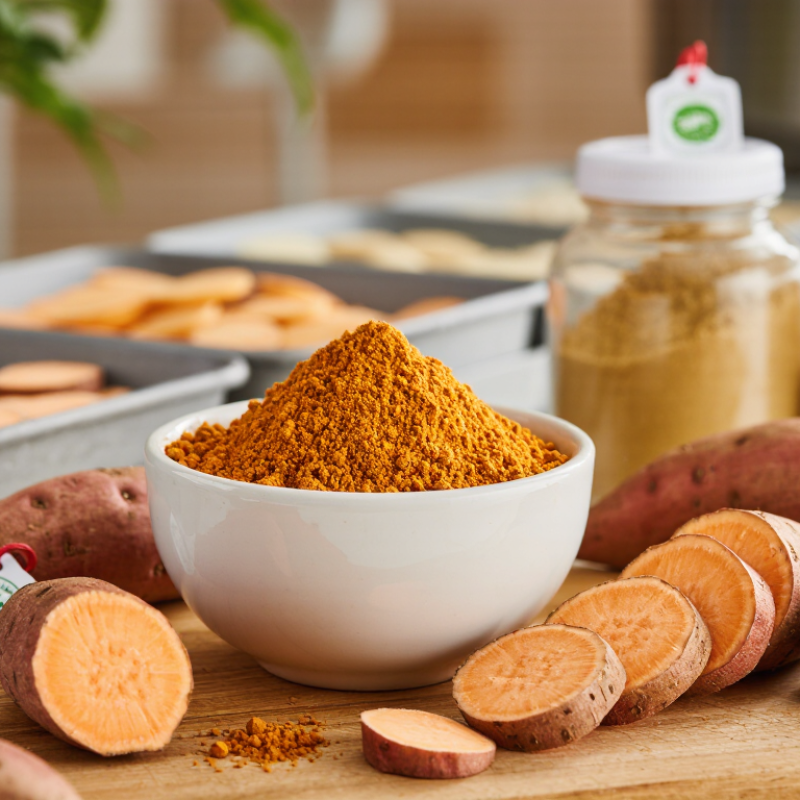
Organic sweet potato powder is a finely milled ingredient made from organically grown sweet potatoes. Producers wash, slice, dry, and grind the roots under controlled conditions. This process removes moisture while retaining the vegetable’s natural color, starch, and mild sweetness. It is not the same as a flavored drink mix. Pure powder should contain sweet potato only, unless the label states otherwise. Good powder smells faintly earthy and looks evenly colored. Texture matters too. Lumps can signal moisture exposure.
In practical use, it can add body and gentle sweetness to bakery recipes, noodles, soups, and smoothies. It blends more smoothly when whisked into warm water first. Bakers should adjust liquid carefully because the powder absorbs moisture. Results vary with drying temperature, root variety, and particle size. That detail is easy to overlook. An experienced supplier should explain these variables and provide batch specifications, including moisture, microbiological results, and allergen handling information. Organic status should be supported by valid certification for the relevant market, not marketing language alone.
Storage also affects quality. Keep the powder sealed, cool, dry, and away from strong odors. After opening, humid air can change its flow and aroma. Small test batches often reveal problems faster than large orders. Color may look attractive, yet flavor can be flat. This is where honest evaluation matters. Organic sweet potato powder offers convenience, but it still needs careful sourcing, testing, and recipe adjustment.
How China Produces and Processes Organic Sweet Potato Powder
China Top Organic Sweet Potato Powder Supplier
How China Produces and Processes Organic Sweet Potato Powder
Organic sweet potatoes are grown in selected farming areas with documented soil records and controlled inputs. Farmers monitor planting dates, rainfall, field weeds, and possible pest pressure. Certification requires more than a natural appearance. Each harvest needs traceable farm records and approved organic management.
After harvest, workers remove soil, stones, damaged roots, and foreign materials. Clean water washes the potatoes before careful trimming and slicing. The slices are dried with controlled heat and airflow. Excessive heat can darken the powder and reduce its natural aroma. That detail matters.
Dried slices are milled into a fine powder, then passed through sieves for consistent particle size. Production teams test moisture, color, microbial levels, and pesticide residues. Metal detection and sealed packaging add further protection during handling. In practice, results can vary between seasons. Soil moisture, root maturity, and drying speed are difficult to control perfectly. Careful suppliers review these differences instead of hiding them. Batch codes, inspection reports, and storage records help buyers verify the product’s origin and condition.
Key Quality Standards for Organic Sweet Potato Powder
China Top Organic Sweet Potato Powder Supplier
Key Quality Standards for Organic Sweet Potato Powder
Organic sweet potato powder requires more than a clean label. It requires controlled farming, processing, testing, and records. USDA FoodData Central reports about 77.3 grams of water per 100 grams of raw sweet potato. That moisture creates drying pressure. Suppliers should document harvest conditions, drying temperature, milling controls, and final water activity. Low moisture alone does not prove stability. Water activity, microbial counts, and packaging performance must be checked together.
Organic status must remain traceable from field to finished powder. USDA organic rules require certified operations, approved inputs, and production records. EU Regulation 2018/848 also emphasizes traceability and contamination prevention. Each lot should link field records to batch numbers, cleaning logs, and laboratory results. Paperwork can look complete. Yet weak supplier verification remains a practical risk. An organic certificate is evidence, not a substitute for incoming inspection.
Quality testing should reflect destination-market requirements. The FAO and WHO Codex General Standard for Contaminants and Toxins provides an international reference for contaminant control. Request results for moisture, water activity, microbial counts, heavy metals, and pesticide residues. Sampling matters. A single sample may miss uneven contamination. Suppliers should use representative lot sampling and retain counter-samples. Color and sweetness specifications can remain debatable. They need agreed test methods, not vague promises.
How to Evaluate a China-Based Organic Sweet Potato Powder Supplier
When evaluating a China-based organic sweet potato powder supplier, start with evidence rather than attractive product pages. Request valid organic certificates, recent laboratory reports, and clear ingredient specifications. The documents should identify the certification body, production site, batch number, and testing date. Check moisture, microbial limits, pesticide residues, heavy metals, color, and mesh size. A reliable supplier should explain its traceability system, from farm records to sealed cartons.
Tips: Order samples from different batches. Compare aroma, color, solubility, and sweetness. Ask whether the powder contains carriers, additives, or processing aids. Visit the factory if possible, or arrange an independent audit. A clean floor matters. So does accurate weighing. Confirm export experience, packaging strength, lead times, and complaint procedures before signing a contract.
I have learned that a polished website proves very little. Real confidence comes from consistent samples and answers that match the paperwork. Some suppliers may provide excellent powder but weak communication, creating delays during quality checks. That weakness should not be ignored. Discuss payment terms, inspection rights, storage conditions, and replacement policies in writing. Review the supplier’s response speed and technical knowledge, not only the quoted price. Organic claims also need regular verification, because certificates can expire and farming sources can change. Reliability is built batch by batch.
China Top Organic Sweet Potato Powder Supplier: How to Evaluate a China-Based Supplier
Practical buyer-side weighting for comparing organic sweet potato powder suppliers
Organic certification and food-safety documentation should be verified through valid certificates, audit records, laboratory reports, and batch traceability. Product consistency, export readiness, and documentation completeness also help reduce quality and logistics risks. The percentages are a practical procurement framework rather than market-share data for any specific company or brand.