How to Choose the Best Fruit Washer for Your Kitchen Needs?
When it comes to maintaining a healthy kitchen, a fruit washer can be a vital tool. In recent years, the awareness of food safety has surged. According to a report by the Food and Drug Administration (FDA), nearly 48 million Americans fall ill from foodborne illnesses each year. Many cases stem from contaminated fruits and vegetables. This alarming statistic underscores the need for effective washing solutions.
A quality fruit washer not only cleans but also removes pesticides and bacteria. A study published by the Journal of Food Protection indicates that proper washing can reduce pesticide residues by up to 90%. Yet, choosing the right fruit washer can be challenging. Some models may fail to deliver the efficiency they promise. Consumers often face distractions from flashy marketing claims. It’s crucial to evaluate options thoughtfully.
Moreover, the variety of fruit washers available can confuse even seasoned home cooks. High-priced gadgets may not always guarantee performance. Research by Consumer Reports suggests that consumers should look beyond brand names. Instead, focusing on features and practical usability is essential. Selecting a fruit washer is about finding the perfect balance for your kitchen needs.
Understanding the Importance of Washing Fruits and Vegetables
Washing fruits and vegetables is more than just a preference; it’s essential for health. A study by the USDA found that nearly 90% of produce carries pesticide residue. If you eat unwashed fruits, you are consuming those harmful chemicals. Proper washing can reduce these residues significantly, promoting better health and wellness.
Tips: Always rinse fruits and vegetables under running water. Scrubbing firm produce, like cucumbers or potatoes, can help too. Remember to wash even organic produce, as it may still harbor dirt or bacteria.
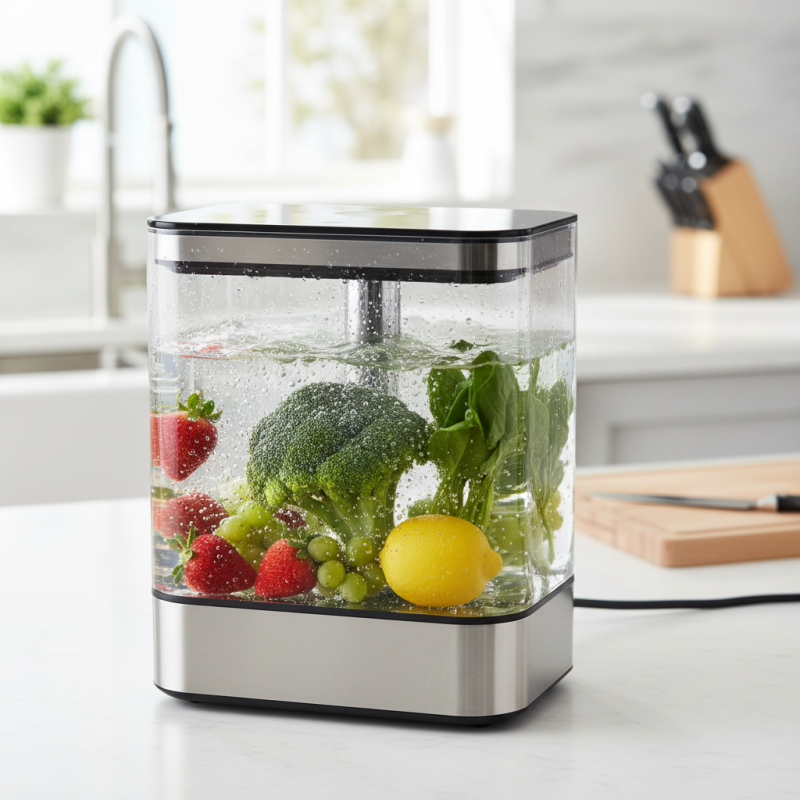
Contaminated food leads to thousands of hospital visits each year. According to the CDC, about 48 million people get sick from foodborne illnesses annually. People often overlook this risk. Many assume that a quick rinse is enough, but various pathogens can survive that. A fruit washer can be a worthwhile investment to ensure thorough cleaning, but it is not a substitute for proper handling.
Tips: Soak leafy greens in a bowl of water before rinsing. This can help remove dirt and pesticides hidden in crevices. And after washing, dry your produce with a clean towel to eliminate any lingering contaminants.
How to Choose the Best Fruit Washer for Your Kitchen Needs? - Understanding the Importance of Washing Fruits and Vegetables
| Feature |
Description |
Importance |
| Size |
Compact models fit easily on countertops, while larger models can handle more fruit. |
Choosing the right size ensures it meets your kitchen space and washing needs. |
| Capacity |
Varies based on the model, some wash small quantities while others can handle a larger load. |
Higher capacity is essential for larger families or regular hosting. |
| Cleaning Method |
Some use water jets, others employ ozone or ultrasonic cleaning technologies. |
Effective cleaning methods are crucial for removing pesticides and dirt. |
| Ease of Use |
User-friendly controls and quick cleaning cycles. |
Convenience in daily usage leads to more consistent fruit washing. |
| Price Range |
Various models available from budget to premium pricing. |
Understanding budget impacts the options available for purchase. |
| Energy Efficiency |
Some models are designed to use less water and energy. |
Energy-efficient models save costs in the long run. |
Key Features to Look for in a Fruit Washer
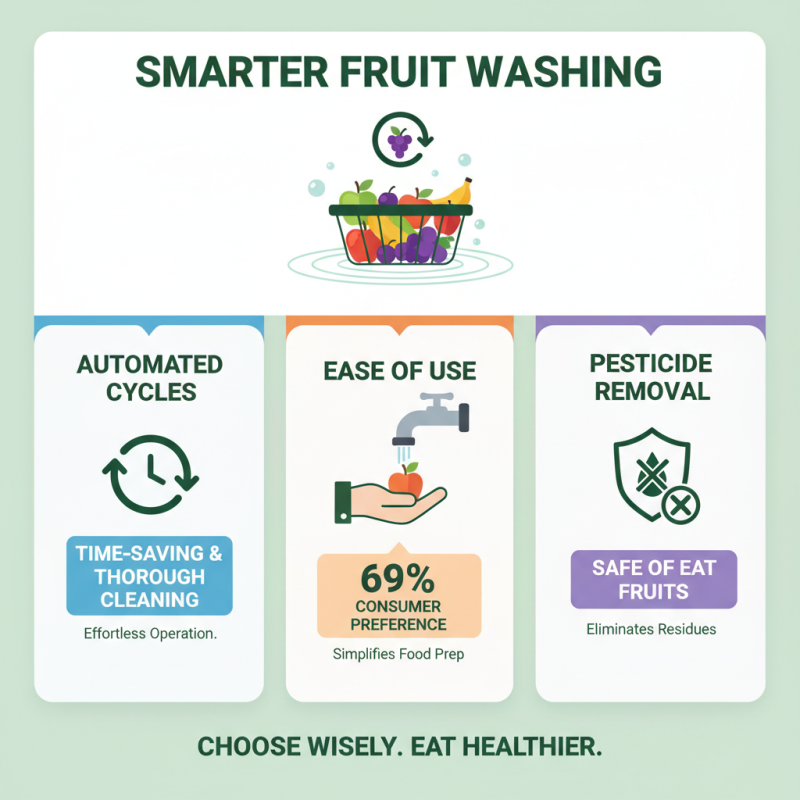
Choosing the right fruit washer involves understanding key features that can enhance your kitchen experience. Look for a model that offers automated cleaning cycles. This not only saves time but also ensures thorough cleaning. According to a study, 69% of consumers prefer appliances that simplify food preparation tasks. An efficient washer should remove pesticides and residues, ensuring your fruits are safe to eat.
Consider the size of your fruit washer. A compact model fits well in most kitchens, while larger units can clean more in a single cycle. Research shows that 40% of households prioritize space-saving appliances. Additionally, a washer with adjustable settings allows you to clean different types of fruits effectively. Watch for features like gentle washing for delicate berries and stronger cycles for harder-shelled fruits.
Tips: Always check the filtration system. A good filtering process removes dirt and particles effectively. Also, a user-friendly interface can make the cleaning process easier. Lastly, consider energy efficiency ratings, as this can affect long-term costs. Not all washers meet these standards. Reflect on your specific needs to avoid overspending.
Comparative Analysis of Popular Fruit Washer Models
When it comes to selecting a fruit washer, several factors need consideration. Many models vary in effectiveness and features. Some have simple designs, while others include high-tech solutions. A basic model may remove dirt and pesticides, but it may not fully sanitize. Advanced models utilize ultrasonic waves or ozone, promising deeper cleaning. However, these may be more cumbersome to use or maintain.
Another aspect to consider is the capacity of the washer. Compact models fit easily into small kitchens but may not handle large batches. Larger units can wash more at once, saving time but consuming more space. It's essential to weigh your kitchen's needs against the product's size. You might also find that spending more does not always guarantee better quality. Sometimes, cheaper options perform surprisingly well.
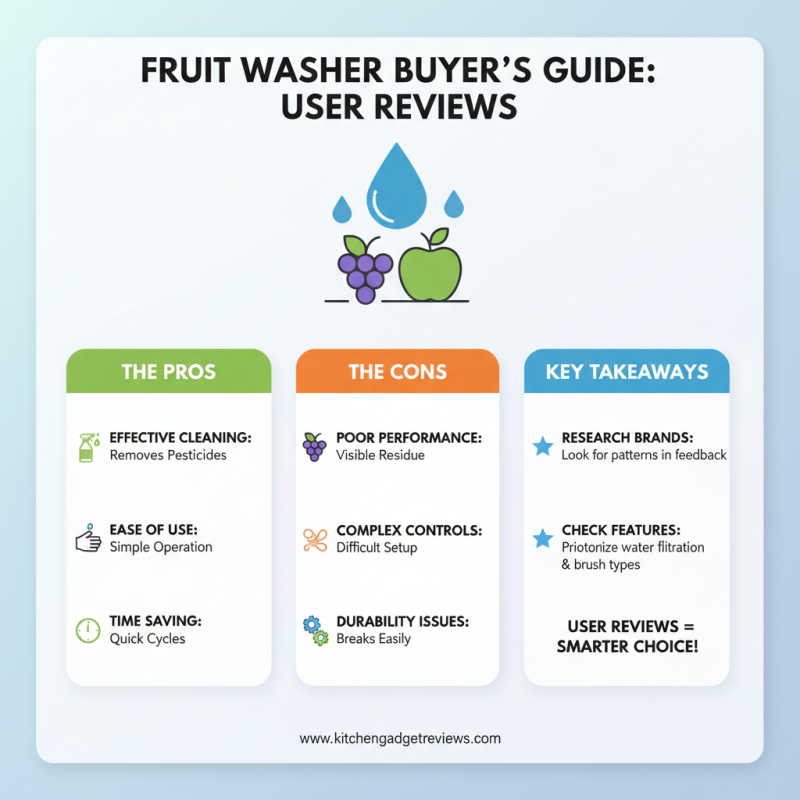
User reviews often reveal hidden issues. Many praise the convenience of fruit washers, but some report noise or lengthy cleaning cycles. Look closely at these insights. They can help you avoid models that seem appealing in ads. A fruit washer should save you time in the kitchen, not add frustration. Consider exploring various models. Be sure they meet your actual daily needs.
Evaluating Budget Considerations for Kitchen Fruit Washers
When considering a fruit washer for your kitchen, budget plays a crucial role. Prices for these appliances can vary significantly. Some models may be quite affordable, while others can be surprisingly expensive. Understand your financial limits before diving into options. Spending more does not always guarantee better quality or performance. Sometimes, budget models do just as good a job.
Think about what you value most. If you wash large quantities, investing in a mid-range model might save you time. For occasional use, a simple, lower-cost washer could be sufficient. Remember to account for ongoing costs too, such as energy consumption and durability over time. A cheap model may seem like a bargain initially, but it may wear out quickly.
Don’t forget to consider user reviews and experiences. They can offer real insights into whether a product truly meets expectations. It’s vital to assess features against your needs. An expensive model with many functions might not be necessary for a small household. Prioritize practical functionality over flashy extras.
How to Choose the Best Fruit Washer for Your Kitchen Needs
This chart presents the popularity of fruit washers categorized by budget considerations. It highlights that mid-range fruit washers are the most popular option among consumers, while budget-friendly models follow closely behind. High-end fruit washers have the least popularity, indicating a potential preference for affordability and value.
User Reviews and Expert Opinions: Making an Informed Decision
When selecting the best fruit washer for your kitchen, user reviews provide invaluable insights. Many people share experiences online about their cleaning results. They often highlight features that work effectively and those that don’t. A simple search can reveal patterns, such as ease of use and efficiency. Some users praise particular models for removing pesticides, while others express disappointment with performance.
Expert opinions can balance these user reviews. Professionals may offer insights based on testing various models. They usually emphasize durability and design. Experts often consider important factors like water consumption and power usage. Some models receive rave reviews for their innovative designs, while others may fall short. It’s crucial to weigh these expert analyses with user feedback.
While personal experiences are important, they can vary widely. Not every model meets everyone's needs. For instance, some users might find a washer too bulky for small kitchens. Others may feel certain features are redundant. Reflecting on these differences aids in making an informed choice. Ultimately, combining user reviews and expert insights can guide you toward the right decision for your kitchen.