
Top 10 Fruit Washing Machine Manufacturers Worldwide

Top 10 Fruit Washing Machine Manufacturers Worldwide

Fruit washing machines sit at a critical point between harvested produce and consumer trust. This guide introduces ten leading fruit washing machine manufacturers worldwide, comparing their engineering capabilities, hygiene standards, and practical performance. The list considers equipment for apples, citrus, berries, grapes, and other delicate produce.

A strong machine must do more than remove visible soil. It should control water flow, reduce bruising, protect fruit surfaces, and support stable throughput. Stainless-steel construction matters. So do cleanable welds, adjustable brushes, filtered water circulation, and accessible inspection points. Some systems include air knives, ozone treatment, or automated sorting interfaces. These features may improve efficiency, but they also increase maintenance demands and operating costs.

Dr. S. Paul Singh, a respected food-processing engineering scholar, has emphasized, “Process control is the foundation of consistent food quality.” This principle applies directly to modern washing lines. Manufacturers are judged by measurable results, not attractive brochures. Important evidence includes washing consistency, water use per tonne, energy consumption, service response, and spare-parts availability.

The ranking is not absolute. A compact processor may prefer a flexible European line, while a large exporter may need continuous high-capacity equipment. Regional support can matter more than brand reputation. That point is easy to overlook.

Real factories are imperfect places. Fruit size changes. Water quality fluctuates. Operators make mistakes. The best manufacturers acknowledge these conditions and design equipment that remains reliable under pressure. This comparison aims to help buyers assess technology carefully, ask better questions, and choose a fruit washing machine suited to actual production needs.
Top 10 Fruit Washing Machine Manufacturers Worldwide

Global Fruit Washing Machine Manufacturing: Scope and Definitions

Global fruit washing machine manufacturing covers equipment used to remove soil, field debris, wax residues, and surface microorganisms from fresh fruit. It includes immersion tanks, spray washers, brush systems, air knives, water-recovery units, and integrated inspection modules. Household appliances are outside this scope. The focus is industrial and commercial equipment.

Demand is linked to an enormous raw-material base. FAOSTAT data show global fruit production has remained above 900 million tonnes in recent years. That volume requires different washing designs for apples, citrus, berries, and delicate stone fruit. A useful Top 10 assessment should compare throughput, water use, cleaning consistency, fruit damage, automation, and after-sales service. Capacity alone can mislead.

Water management is becoming central. The UNEP Food Waste Index Report 2024 estimated 1.05 billion tonnes of food waste in 2022. Better washing cannot solve waste by itself, but it may support longer shelf life when paired with careful handling. Manufacturers increasingly provide filtration, recirculation, and sanitation controls. These features need independent verification. Some published performance figures remain difficult to compare. This is an important weakness in the sector. Definitions also vary between “washing capacity” and “line capacity,” which can produce unrealistic rankings. A reliable global review should therefore examine factory evidence, test conditions, energy demand, and compliance documentation, not only marketing claims. (FAOSTAT, 2024; UNEP, 2024)

How Fruit Washing Machines Operate in Commercial Processing

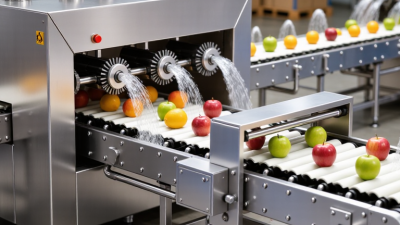
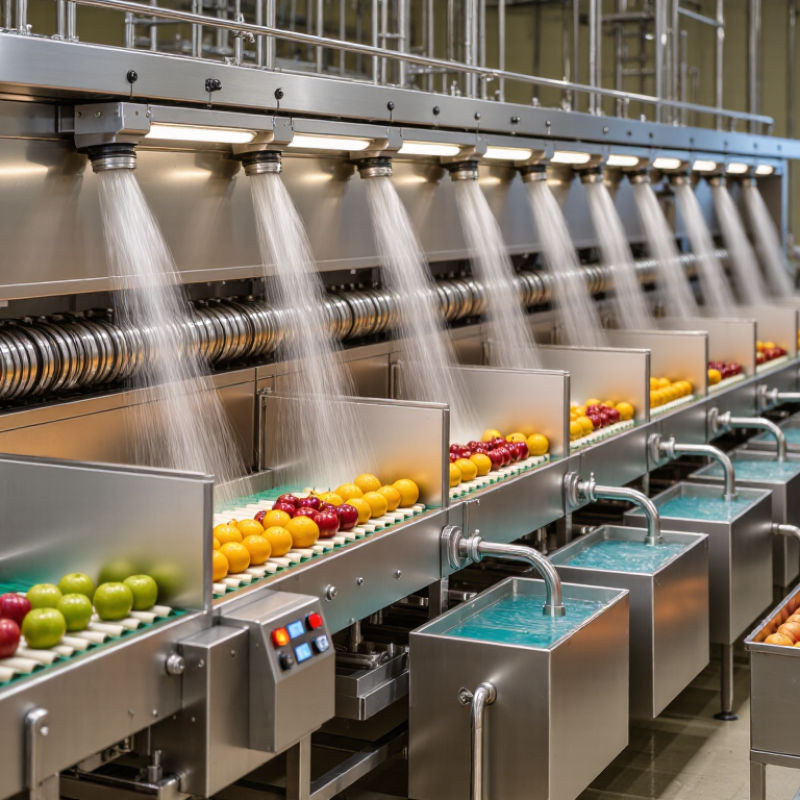
In commercial fruit processing, washing machines remove soil, plant residue, and surface microorganisms through controlled water movement. Operators load fruit onto a food-grade conveyor, where spray bars wet each piece evenly. Rotating brushes, soft rollers, or bubbling water then loosen contamination without excessive impact. The machine’s design changes with the fruit.

Firm apples can tolerate stronger brushing than ripe peaches. Delicate fruit needs lower pressure and gentler contact. A small mistake matters. Too much force may cause bruises that appear several hours later. Too little water can leave dirt near stems, skins, or uneven surfaces. Skilled operators adjust belt speed, spray pressure, water temperature, and brush rotation during production.

Modern equipment often includes water filtration, stainless-steel contact surfaces, adjustable nozzles, and inspection points. Sensors may monitor flow, temperature, and conveyor speed. However, sensors do not replace practical judgment. I have seen clean-looking fruit fail inspection because water quality changed during a long shift. Regular sampling remains important. Workers should check filter screens, brush wear, drainage, and contact areas between batches. Manufacturers can provide capable systems, but installation, sanitation routines, and operator training decide much of the real performance. Some factories still rely on factory settings for every crop, and that approach deserves reconsideration.

Top 10 Fruit Washing Machine Manufacturers Worldwide - How Fruit Washing Machines Operate in Commercial Processing

No. Anonymous Manufacturer Profile Machine Configuration Typical Fruit Applications Typical Throughput Main Washing Action Water-Management Method Commercial Processing Benefit
1 Profile 01 Rotary drum washer Apples, pears, citrus and firm stone fruit 2–10 t/h Rotating perforated drum, spray bars and controlled tumbling Recirculation tank with filtration and overflow replacement High capacity and continuous operation for robust whole fruit
2 Profile 02 Brush-bed washer Apples, peaches, nectarines and plums 1–8 t/h Rotating food-grade brushes combined with overhead spraying Separate wash and final-rinse circuits Improves removal of dust, soil and surface residues
3 Profile 03 Water-flume washer Apples, pears, tomatoes and other buoyant produce 3–15 t/h Hydraulic conveying, immersion and low-impact water movement Settling zone, screens and controlled water exchange Gentle handling reduces impact damage during transfer
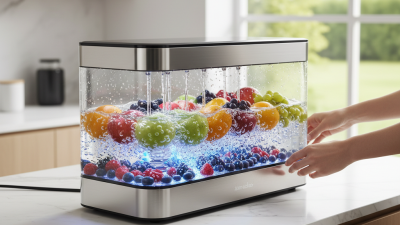
4 Profile 04 Air-bubble washer Berries, grapes, cherries and delicate small fruit 0.5–5 t/h Aerated water creates turbulence around the fruit surface Filtered recirculation with adjustable water turnover Provides low-contact cleaning for fragile produce
5 Profile 05 Spray-tunnel washer Citrus, apples, pears and packaged whole fruit 2–12 t/h Multiple high-volume spray zones over a conveyor Progressive filtration and fresh-water final rinse Easy integration with grading, waxing and drying lines
6 Profile 06 Roller-conveyor washer Citrus, apples, kiwifruit and firm produce 2–10 t/h Rotating rollers expose multiple fruit surfaces to spray Independent wash tank, pumps and rinse manifold Provides consistent surface coverage and controlled spacing
7 Profile 07 Immersion washer with lift conveyor Melons, mangoes, avocados and heavily soiled fruit 1–8 t/h Full or partial immersion followed by spray rinsing Tank filtration, skimming and scheduled water renewal Longer contact time supports removal of field dirt
8 Profile 08 Ultrasonic-assisted washer Firm fruit requiring enhanced surface cleaning 0.5–4 t/h Ultrasonic cavitation combined with immersion or spraying Filtered tank with monitored water quality Can improve access to surface crevices when properly validated
9 Profile 09 Modular hygienic washer Mixed fruit lines and multi-product facilities 1–12 t/h Selectable brushes, sprays, immersion and final-rinse modules CIP-compatible piping, filtration and drainable tanks Flexible layout and easier sanitation between product runs
10 Profile 10 Compact batch washer Small processors, fresh-market fruit and seasonal operations 100–1,000 kg/h Batch soaking, agitation and manual or powered discharge Drain-and-refill operation or small recirculation loop Lower capital requirement and suitable for variable production volumes

Note: Throughput figures are typical commercial design ranges and vary with fruit size, loading density, soil level, washing time, water flow, equipment dimensions and product quality requirements. Sanitizing chemicals, temperature settings and water-reuse practices must be selected and validated according to local food-safety regulations and the processor’s HACCP program.

Selection Criteria for Evaluating Global Manufacturers

Top 10 Fruit Washing Machine Manufacturers Worldwide

Selection Criteria for Evaluating Global Manufacturers

Evaluating fruit washing machine manufacturers requires more than comparing prices. A reliable supplier should show practical experience with different fruit sizes, skins, firmness levels, and soil conditions. Ask for production records, testing procedures, and evidence from comparable facilities. Strong manufacturers explain how spray pressure, brush speed, water temperature, and conveyor timing affect cleaning quality.

Machine construction deserves close inspection. Food-contact surfaces should resist corrosion and allow quick drainage. Welds must be smooth, without hidden dirt traps. Operators should reach filters, pumps, and nozzles without awkward disassembly. Check the machine’s real throughput under working conditions, not only its advertised capacity. Water reuse systems can reduce consumption, but they need clear filtration and sanitation controls. Poorly designed circulation may spread contamination.

After-sales support often separates a dependable supplier from an attractive quotation. Review spare-parts availability, technician response times, training materials, and warranty terms. Request a factory demonstration using similar fruit, because laboratory results can look better than field performance. Independent certifications and documented quality checks add credibility, but paperwork is not proof by itself. A site visit may reveal inconsistent assembly or weak testing records. That matters.

Buyers should also calculate energy use, maintenance labor, installation limits, and expected service life. The cheapest machine may become expensive after repeated nozzle failures. No evaluation is perfect. Assumptions should be recorded and challenged. A careful selection process combines measurable performance, transparent communication, and evidence from real operating environments.

Top 10 Fruit Washing Machine Manufacturers Worldwide

Selection Criteria for Evaluating Global Manufacturers

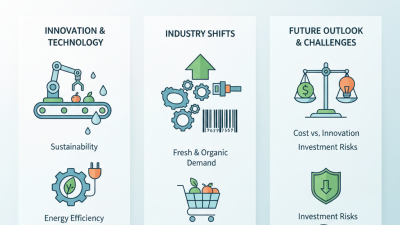
The chart presents a practical procurement-weighting model for comparing global fruit washing machine manufacturers. The criteria focus on measurable factors such as equipment performance, food-safety compliance, after-sales capability, customization, and lifecycle cost. The percentages represent evaluation weights rather than company-specific scores.

Profiles of Ten Leading Fruit Washing Machine Manufacturers

Top 10 Fruit Washing Machine Manufacturers Worldwide

Profiles of Ten Leading Fruit Washing Machine Manufacturers

The ten leading fruit washing machine manufacturers differ in engineering focus, hygiene design, and service depth. One group builds compact bubble washers for small packhouses. Another specializes in rotating brush systems for apples and citrus. Several manufacturers supply spray tunnels with adjustable pressure and water filtration. Some focus on ultrasonic cleaning, while others develop air-knife drying modules. Heavy-duty suppliers integrate washing, grading, waxing, and packing in one line. Regional manufacturers often provide simpler stainless-steel units with easier maintenance. Automation specialists add sensors, digital controls, and recipe storage. Custom engineering firms adapt machines for berries, stone fruit, or delicate produce. Energy-focused manufacturers reduce pump demand through recirculation systems. The strongest suppliers document cleaning validation, material grades, and replacement-part availability.

Market selection needs more than output speed. The FAO reports that 13.2% of food is lost after harvest and before retail, based on its food-loss estimates. Reliable washing equipment can support better handling, but it cannot repair bruised or poorly stored fruit. The UNEP Food Waste Index Report 2024 estimates 1.05 billion tonnes of food were wasted in 2022. Water reuse therefore matters. Look for washable conveyors, controlled spray pressure, and clear drainage paths. A machine processing 5 tonnes per hour may appear efficient, yet excessive water use can raise operating costs. That detail is often overlooked. Buyers should test real fruit, not only empty-line demonstrations, and request measurable data on water consumption, cleaning time, and product damage.

Comparing Technologies, Applications, and Production Capabilities

Top 10 Fruit Washing Machine Manufacturers Worldwide: Comparing Technologies, Applications, and Production Capabilities

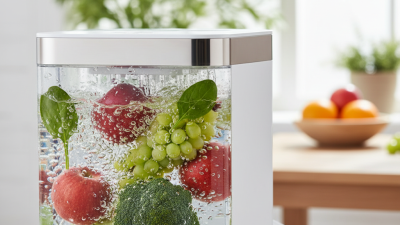
Fruit washing machine manufacturers differ widely in cleaning methods, equipment design, and production capacity. In practical factory evaluations, spray systems suit firm fruit with light surface dust. Bubble washing provides gentler movement for berries, grapes, and leafy produce. Brush systems remove stubborn soil, but excessive pressure can damage soft skins. Water temperature, flow control, and sanitation access also affect daily performance.

Applications should match the fruit, not just the machine size. Small processors may need compact stainless-steel units with simple controls. Large facilities often require continuous conveyors, automated dosing, and integrated drying sections. Production capability depends on welding quality, component availability, testing procedures, and after-sales support. A manufacturer with strong output may still lack flexibility for unusual fruit shapes. That is worth checking. No line is perfect.

Tips: Request test videos using your actual fruit. Measure bruising, water use, cleaning time, and hourly output. Ask for maintenance records and food-contact material certificates. Inspect welds, spray nozzles, pumps, and emergency controls before purchase. A factory visit can reveal more than a polished brochure. It may also expose inconsistent assembly or limited spare-part planning. Manufacturers should explain how they control quality across repeated production batches. Pilot testing remains essential, because laboratory results rarely represent a dusty harvest day.