

2026 Top Fruit Processing Equipment Suppliers?

2026 Top Fruit Processing Equipment Suppliers?

Choosing the top fruit processing equipment suppliers for 2026 requires more than comparing product catalogs. A reliable supplier should understand the fruit processing industry, not merely sell machines. The right partner can support washing, sorting, peeling, cutting, pulping, drying, freezing, and packaging operations. Each stage affects product quality, labor safety, waste levels, and production costs.

Real processing conditions matter. An apple line may need gentle sorting to prevent bruising. A citrus facility may prioritize juice recovery and oil separation. Stainless steel contact surfaces, hygienic drainage, adjustable conveyor speeds, and accessible cleaning points deserve close attention. Suppliers should provide tested performance data, installation guidance, operator training, spare parts, and responsive technical service. References from comparable plants can reveal more than polished sales presentations.

Numbers can mislead.

A machine rated for 10 tons per hour may perform differently with soft mangoes, uneven strawberries, or inconsistent raw materials. Energy use, water consumption, maintenance time, and local service capacity should be evaluated together. Certifications and compliance documents also require verification from trustworthy sources. This guide examines leading suppliers through practical criteria, including engineering expertise, customization, automation, after-sales support, and long-term reliability. However, no supplier is perfect for every processor. Market rankings may change as technology, prices, and customer feedback develop. Buyers should still conduct factory visits, request trial runs, and compare total ownership costs before making a final decision. Some details remain difficult to verify publicly, and that limitation should be acknowledged rather than hidden.
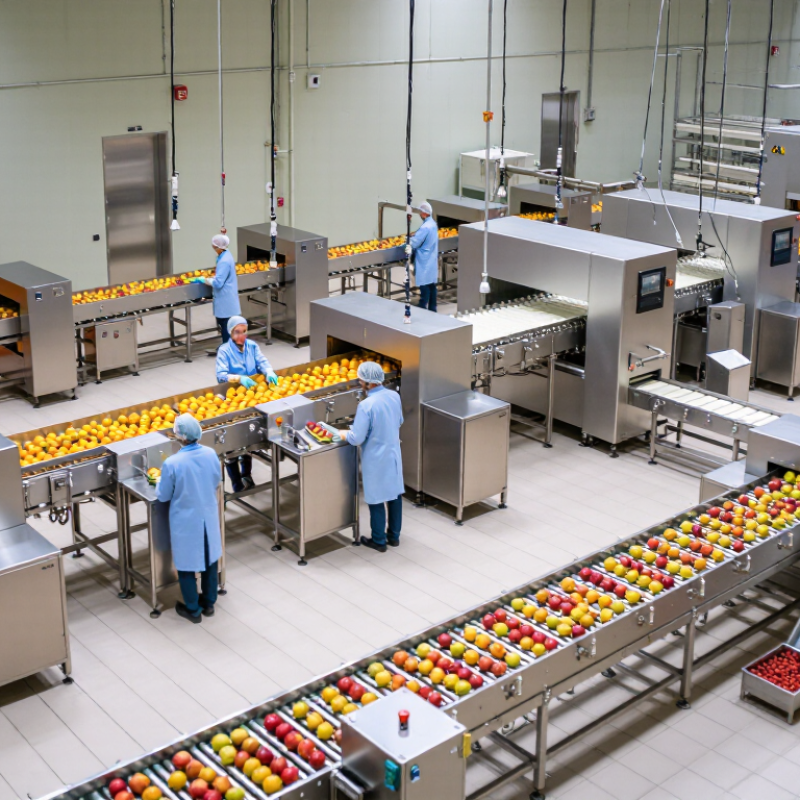
2026 Top Fruit Processing Equipment Suppliers?

What Is Fruit Processing Equipment?

Fruit processing equipment includes the machines used to clean, prepare, transform, and package fresh fruit. It can handle apples, citrus, berries, mangoes, and many other crops. Typical systems include washers, inspection tables, sorters, peelers, cutters, pulpers, crushers, presses, and filling machines. Each unit supports a specific processing step.

A practical line often begins with gentle washing. Water sprays remove soil and loose material from the fruit surface. Inspection stations help workers identify bruised, damaged, or immature pieces. Cutting and peeling equipment then prepares consistent portions. Pulpers and presses separate juice or puree from seeds, skins, and excess fiber. Heat treatment may improve safety and shelf stability when the product requires it.

Good equipment should match the fruit’s texture, size, acidity, and production volume. Soft berries need different handling than firm apples. Stainless steel contact surfaces support sanitation and resist corrosion. Clear access points make cleaning easier between production runs. Still, automation is not always better. A complex machine can increase downtime if operators lack training or replacement parts are difficult to obtain. I have seen efficient designs lose value through poor cleaning routines. That detail matters. Reliable processing depends on equipment, trained staff, maintenance records, and careful quality checks working together.

Which Technologies Shape Modern Fruit Processing?

Modern fruit processing is being shaped by technologies that protect quality before speed. Machine vision and near-infrared sensors inspect color, size, bruising, and internal defects. They can remove inconsistent fruit earlier, reducing waste in pulping and slicing lines. Still, dirty lenses and changing fruit varieties can weaken accuracy. Operators must check calibration during every production shift.

Gentle pulping systems help preserve texture, aroma, and juice yield. Membrane filtration can clarify juice with less thermal damage than traditional methods. High-pressure processing offers another option for fresh-style products, while aseptic filling supports longer shelf life under controlled conditions. These systems require careful validation, sanitation, and trained technicians. Clean equipment matters more than impressive software.

Connected sensors now track temperature, pressure, flow rate, and cleaning cycles in real time. This data supports traceability and helps maintenance teams identify unusual vibration or energy use. However, more data does not automatically create better decisions. Poorly placed sensors may produce misleading readings. Energy recovery, water recycling, and efficient refrigeration are also influencing equipment selection in 2026. A supplier’s technical support, spare-parts planning, and documented performance tests often matter as much as the machine itself. During factory trials, processors should test seasonal fruit, not only perfect samples. Real fruit is rarely cooperative.

2026 Top Fruit Processing Equipment Suppliers?

Which Technologies Shape Modern Fruit Processing?

Representative commercial throughput midpoints for widely used fruit-processing technologies. Actual performance varies with fruit type, product specification, automation level, and line configuration. The figures do not represent any individual company or brand.

How to Evaluate a Fruit Processing Equipment Supplier?

2026 Top Fruit Processing Equipment Suppliers? How to Evaluate a Fruit Processing Equipment Supplier?

Choosing a fruit processing equipment supplier requires more than comparing prices. FAO’s 2023 Food Loss Index report estimated that 13.2% of food was lost globally between harvest and retail in 2021. This makes yield, uptime, and gentle handling practical evaluation targets. Ask suppliers for verified recovery rates using your fruit varieties, not generic laboratory samples. Check cutting accuracy, juice extraction efficiency, cleaning time, and energy use under realistic factory conditions. Small details matter. Wet floors reveal poor drainage.

A reliable supplier should provide traceable materials, hygienic design records, and documented testing. Equipment should support recognized food safety systems, including HACCP principles and ISO 22000-based procedures. Request factory acceptance testing, service response times, spare-parts availability, and operator training. The supplier’s financial stability also matters because a machine may run for fifteen years. A low initial quote can become expensive when seals, sensors, or technical visits are difficult to obtain. I would not trust impressive videos alone. They rarely show blocked conveyors or difficult cleaning points.

Tips: Build a weighted scorecard before contacting suppliers. Give separate scores for hygiene, capacity, yield, automation, maintenance, and total ownership cost. Visit an operating installation if possible. Speak with production staff, not only sales teams. Measure noise, water consumption, and changeover time during the visit. Leave room for doubt. Your fruit may behave differently from the test batch. Include a small paid trial using your own raw material before signing a large order.

2026 Top Fruit Processing Equipment Suppliers? - How to Evaluate a Fruit Processing Equipment Supplier?
Evaluation Dimension Key Supplier Capability Practical Benchmark for Comparison Suggested Weight Evidence to Request
Processing Capacity Ability to handle the required raw-fruit throughput without unstable operation. Compare rated throughput in tonnes per hour against the required production volume, seasonal peaks, and future expansion plans. 12% Validated capacity calculations, process-flow diagrams, production references, and a performance test using representative fruit.
Product Yield Efficient separation of juice, pulp, puree, concentrate, or other target products. Evaluate product recovery, peel and seed separation, solids loss, and the effect of fruit variety and ripeness on yield. 12% Mass-balance report, trial results, yield assumptions, laboratory analysis, and clearly defined acceptance criteria.
Food Hygiene Design Equipment design that supports hygienic production and effective cleaning. Prefer product-contact areas made from suitable stainless steel, accessible welds, hygienic drainage, minimal dead zones, and cleanable product paths. 15% Material certificates, hygienic design drawings, surface-finish specifications, cleaning instructions, and applicable conformity documentation.
Cleaning and Sanitation Compatibility with clean-in-place (CIP), clean-out-of-place (COP), or validated manual cleaning procedures. Assess cleaning time, water and chemical demand, dismantling requirements, temperature limits, and verification methods for allergen or microbial control. 10% CIP sequence, flow and temperature requirements, chemical compatibility data, cleaning validation protocol, and sanitation training materials.
Product Quality Control Ability to maintain consistent quality during washing, sorting, crushing, pulping, heating, and filling. Review control of temperature, oxygen exposure, residence time, particle size, viscosity, soluble solids, and microbial-risk points. 10% Process-control philosophy, instrumentation list, sample quality records, alarm limits, and links to HACCP control points.
Automation and Traceability Reliable monitoring, recipe management, alarms, data logging, and batch traceability. Check whether the system records critical process parameters and supports user access control, audit trails, and exportable production data. 8% Control-system architecture, sample batch report, software documentation, backup procedure, and operator-interface demonstration.
Energy and Utility Efficiency Efficient use of electricity, steam, water, compressed air, refrigeration, and cleaning chemicals. Compare utility consumption per tonne of finished product under equivalent operating conditions, not only installed motor power. 8% Utility balance, equipment load list, heat-recovery options, water-consumption data, and performance assumptions.
Flexibility and Product Range Capability to process different fruits, formats, recipes, and packaging requirements. Evaluate changeover time, recipe range, fruit-size tolerance, modularity, optional equipment, and compatibility with seasonal product variation. 8% Changeover procedure, product compatibility matrix, trial samples, modular equipment list, and future expansion layout.
Safety and Compliance Protection of operators and conformity with the regulations applicable to the installation location. Review guarding, emergency stops, lockout provisions, pressure protection, electrical safety, noise exposure, and regional conformity requirements. 7% Risk assessment, safety circuit drawings, declaration of conformity where applicable, user manual, and inspection records.
Installation and Commissioning Ability to integrate equipment into the building, utilities, layout, and existing production line. Assess site requirements, installation schedule, commissioning plan, factory acceptance testing, site acceptance testing, and operator training. 5% General arrangement drawings, utility schedule, interface list, FAT/SAT templates, installation responsibilities, and training plan.
After-Sales Service Availability of technical support, spare parts, maintenance assistance, and troubleshooting resources. Compare response targets, remote-support capability, critical-spares availability, preventive-maintenance intervals, and local service coverage. 3% Service-level agreement, spare-parts list, maintenance schedule, escalation contacts, and documented service case examples.
Total Cost of Ownership Whole-life financial value rather than purchase price alone. Include equipment price, installation, utilities, labor, consumables, maintenance, spare parts, downtime risk, and expected service life. 2% Five- to ten-year cost model, warranty terms, maintenance estimate, energy assumptions, replacement-parts pricing, and payment schedule.
Recommended Supplier Assessment Score 100% Score each dimension from 1 to 5, multiply by the assigned weight, and compare suppliers using the same test conditions and acceptance criteria.
Evaluation note: A reliable comparison should use the same fruit variety, incoming quality, target product specification, production rate, utility conditions, and cleaning requirements for every supplier. Certifications and standards should be verified against the destination market and the actual equipment scope.

What Are the Leading Fruit Processing Equipment Suppliers in 2026?

In 2026, leading fruit processing equipment suppliers are defined by measurable plant performance, not attractive catalogs. Experienced suppliers provide complete lines for washing, sorting, peeling, pulping, pasteurizing, filling, and cold storage. Their designs should match fruit variety, seasonal volume, factory layout, and utility limits. A dependable supplier must show verified throughput data from comparable installations. Factory visits, operator interviews, and maintenance records reveal more than sales presentations. This matters. Wet floors, bruised fruit, and unstable temperatures quickly expose weak planning.

Technical strength includes hygienic stainless-steel construction, gentle conveying, accurate temperature control, and clean-in-place systems. Leading suppliers also offer trials using the buyer’s actual fruit. Laboratory results should cover yield, color retention, microbial control, and energy consumption. Engineers must explain control systems in practical language. Training, spare-parts availability, remote diagnostics, and response times deserve equal attention. A low purchase price can become expensive when seals, sensors, or pumps fail during harvest. Procurement teams should compare ownership costs over at least five years.

Supplier claims are not always complete. Some performance figures rely on ideal fruit and perfect operators. Ask for limitations. Problems may appear during mixed-size batches, power interruptions, or sudden temperature changes. I would question overly complex automation when local technicians lack advanced training. Simple equipment can be more reliable, though it may reduce flexibility. Independent testing and clear acceptance criteria protect both sides. The strongest 2026 supplier acts as a responsive engineering partner, documenting results and admitting where its system needs improvement.

FAQS

What does fruit processing equipment do?

It washes, sorts, peels, cuts, presses, and packages fruit. Each machine handles a specific step.

Which machines might a processing line include?

A line may use washers, inspection tables, sorters, peelers, cutters, pulpers, presses, and filling machines.

How should equipment suit different fruit?

Match it to fruit texture, size, acidity, and production volume. Soft berries need gentler handling than firm apples.

What should buyers check during a supplier evaluation?

Ask for yield, cleaning-time, energy-use, and cutting-accuracy data from realistic production tests. Your fruit may behave differently.

Why are hygiene and cleaning access important?

Stainless-steel contact surfaces resist corrosion, while clear access points make cleaning easier between production runs. Wet floors can reveal drainage problems.

What should a supplier provide beyond the machines?

Look for operator training, spare parts, maintenance support, service response times, and documented testing.

Is the lowest purchase price always the best choice?

No. Hard-to-find seals, sensors, or technical support can raise long-term costs.

How can buyers verify performance claims?

Visit an operating installation, speak with production staff, review maintenance records, and request a trial using your own fruit.

Is more automation always better?

Not necessarily. Complex systems may cause downtime when training or local technical support is limited. Simpler equipment can be less flexible.

What conditions should equipment tests cover?

Check mixed-size fruit, temperature changes, power interruptions, cleaning, and seasonal operating conditions. Ideal test batches can hide weaknesses.