Top 10 Benefits of Using an Automatic Bag Filler Machine?
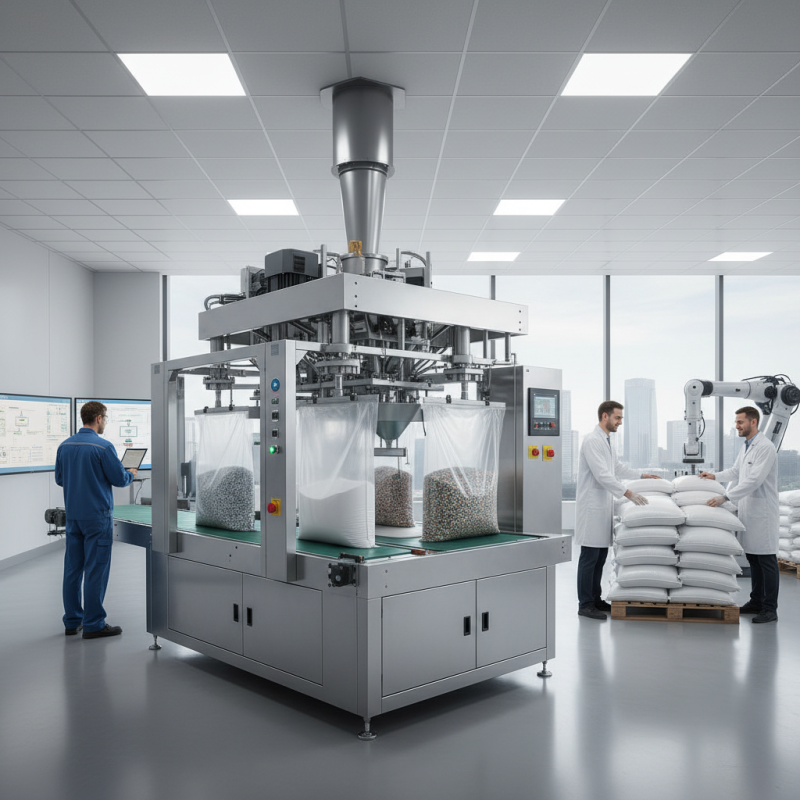
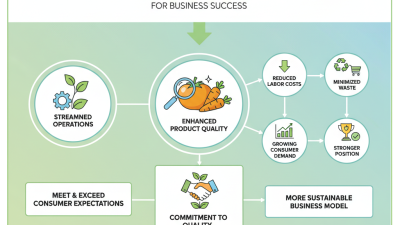
In today’s fast-paced world, efficiency is key. An automatic bag filler can transform operations in various industries. This machine streamlines the packaging process, saving time and labor costs. It fills bags quickly and accurately, ensuring uniform distribution. Companies benefit from reduced waste as precise measurements minimize spillage.
An automatic bag filler also enhances productivity. Workers can focus on other tasks, reducing burnout. However, integrating new technology can be a challenge. Staff may need training, and initial costs can be high. Still, the long-term savings often outweigh these issues.
Ultimately, embracing an automatic bag filler machine may lead to a more efficient workflow. The benefits are tangible, but organizations must also invest in education and support. The right approach can lead to significant gains in both quality and output.
Benefits of Increased Efficiency in Packaging Processes
Automatic bag filler machines are revolutionizing packaging processes, significantly boosting efficiency. According to a report from Smithers Pira, automation in packaging can increase production speed by 30% or more. This speed translates to meeting high demand without sacrificing quality. By reducing the time spent on manual filling, businesses can better allocate resources to other important areas.
The accuracy of automatic bag fillers also enhances overall efficiency. A study by PMMI shows that these machines can achieve filling accuracy rates exceeding 99%. This precision minimizes waste and ensures customers receive exactly what they ordered. When manual errors occur, they can lead to costly returns and dissatisfied clients. Automation can help avoid these pitfalls.
Despite these advantages, it's essential to reflect on potential challenges. Initial investment costs can be significant. Businesses must consider whether the long-term efficiency gains outweigh these upfront expenses. Adapting existing processes to accommodate new technology can also require time and training. Balancing these factors is crucial for success in a competitive market.
Reduction of Labor Costs through Automation
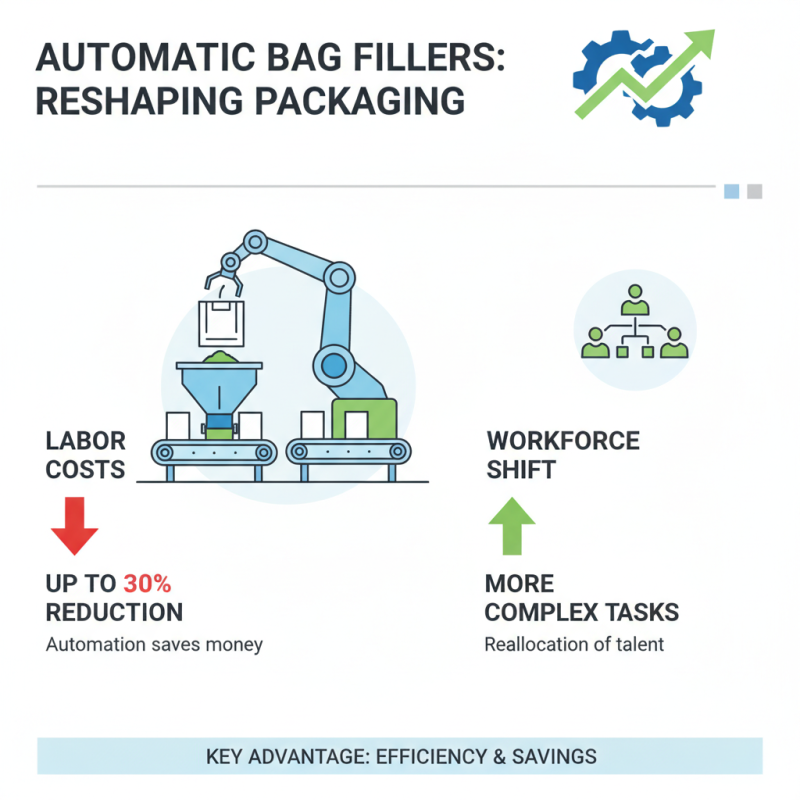
The adoption of automatic bag filler machines is reshaping the packaging industry. One key advantage is the reduction of labor costs through automation. Research shows that automation can cut labor costs by up to 30%. This reduction not only saves money but also allows for reallocating workforce resources to more complex tasks.
Many businesses face challenges integrating new technology. The initial investment for automation can be daunting. Yet, the long-term savings make it worthwhile. For example, with fewer workers needed for filling processes, companies can streamline operations and improve efficiency. According to industry reports, companies often see ROI in less than two years after implementing automated solutions.
**Tip:** Regularly assess your workflow to identify potential areas for automation. Look for repetitive, manual tasks that consume time and resources.
By studying the impact of automation, companies can understand its benefits. Increased productivity does not come without potential pitfalls. Adapting to new systems may require training and adjustments. Overall, while there are challenges, the shift to automatic bag fillers enhances operational efficiency significantly.
**Tip:** Invest in training for your staff. Education ensures a smoother transition to automated systems, minimizing disruptions.
Improved Accuracy and Consistency in Filling
Automatic bag filler machines have revolutionized the packaging industry. Improved accuracy and consistency in filling are two of the standout features. These machines can measure and dispense precise amounts of products, reducing errors. This level of precision is essential in sectors like food and pharmaceuticals. A consistent fill reduces product waste, which can impact profitability.
The technology behind these machines often includes advanced sensors and controls. These ensure that every bag is filled uniformly, which is crucial for maintaining quality. Imagine a scenario where each bag is overfilled or underfilled. It could lead to unhappy customers and increased return rates.
However, implementing such systems does require careful consideration. Not every business may need high-speed filling. There's also the cost to factor in. Training staff to operate the machines can be a challenge too. Many companies find this aspect tricky. They need to strike a balance between automation and human oversight to maintain product integrity.
Top 10 Benefits of Using an Automatic Bag Filler Machine
| Benefit |
Description |
Impact |
| Improved Accuracy |
Ensures precise bag filling to reduce material waste. |
Higher product quality and cost savings. |
| Consistency |
Delivers uniform filling rates across production runs. |
Enhances brand reputation and customer trust. |
| Speed |
Increases throughput by packing bags faster than manual methods. |
Boosts production efficiency and reduces labor costs. |
| Reduced Labor Costs |
Less manpower required for filling operations. |
Lowers operational expenses significantly. |
| Flexible Design |
Can handle various bag sizes and materials. |
Adapts easily to changing production needs. |
| Less Waste |
Optimizes material usage through precise filling. |
Enhances sustainability and reduces costs. |
| Ease of Integration |
Easily fits into existing production lines. |
Facilitates smooth transitions and upgrades. |
| Data Monitoring |
Equipped with technology to track production metrics. |
Improves decision-making and operational adjustments. |
| Increased Safety |
Reduces manual handling risks associated with filling. |
Promotes a safer working environment. |
| Improved Shelf Life |
Ensures proper sealing and filling, enhancing product durability. |
Extends product freshness and reduces spoilage. |
Enhanced Product Safety and Quality Control
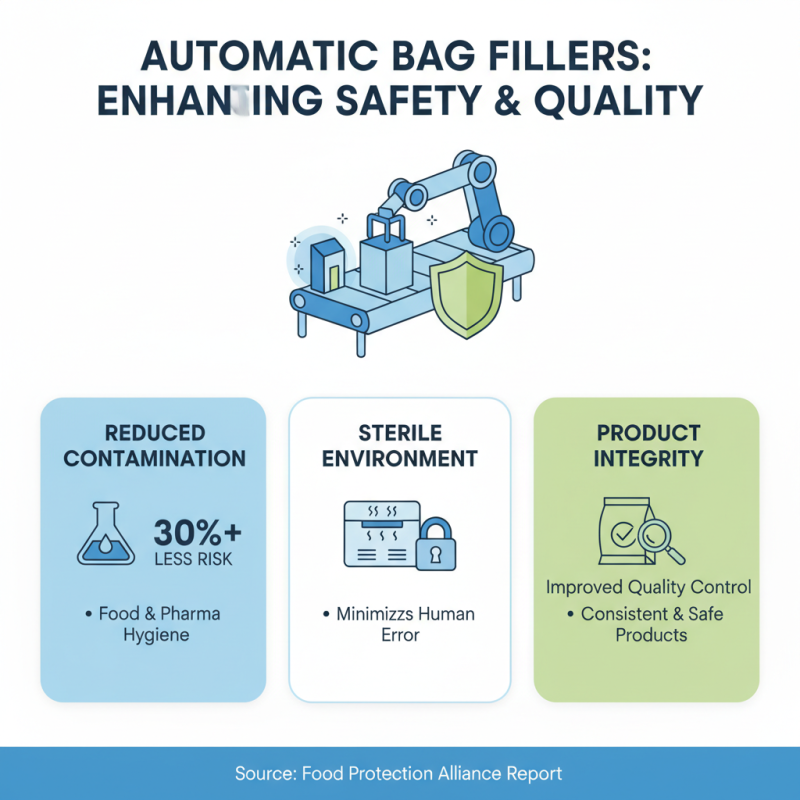
Automatic bag filler machines enhance product safety and quality control in various industries. According to a report by the Food Protection Alliance, automated packaging processes reduce contamination risks by over 30%. This is crucial for food and pharmaceutical sectors, where hygiene is paramount. Machines ensure a sterile environment, drastically limiting human error.
Moreover, consistent filling volumes promote quality standards. The International Journal of Food Science highlights that precise filling reduces product wastage. Inaccurate measurements can lead to customer dissatisfaction or product recalls. Automated systems maintain high precision, often achieving variances of less than 1% in fill weight.
However, challenges exist. Maintenance of these machines is critical. Long downtimes for repairs can disrupt production cycles. Additionally, the initial investment may not be feasible for all businesses. Companies must weigh the costs against the benefits of enhanced safety and quality. Ultimately, the decision to implement automated systems requires careful consideration.
Flexibility in Handling Various Bag Sizes and Materials
When considering efficiency in packaging, flexibility is key. Automatic bag filler machines excel in managing various bag sizes. Reports indicate that nearly 70% of manufacturers find scalability crucial. They often deal with a mix of small and large bags. Such versatility helps accommodate different packaging needs without extensive downtime.
These machines can adjust to various materials too. From plastic to paper, they handle it all. Some studies show that 60% of companies see improved productivity when using adaptable systems. However, challenges can arise with unusual materials. Operators may face trial and error during transitions. Proper training is essential for smooth operations.
Balancing flexibility and efficiency is not without its flaws. Certain setups may lead to excess waste or inconsistent fills. The right configuration takes time. Fine-tuning these machines ensures a better fit for products. Many businesses overlook this aspect, leading to challenges in production. Adjustments are critical for optimal performance and cost-effectiveness.
Top 10 Benefits of Using an Automatic Bag Filler Machine