2026 Top Granular Flower Fertilizer for Global Buyers?
Global buyers are rethinking Granular Flower Fertilizer as input costs, soil health, and climate pressure reshape ornamental production. The International Fertilizer Association’s Medium-Term Fertilizer Outlook 2024–2028 highlights changing nutrient demand and tighter efficiency expectations. FAO’s World Food and Agriculture Statistical Yearbook also shows why responsible nutrient management matters across global agriculture. These reports do not rank flower fertilizers. They provide useful context for evaluating them.
A strong 2026 product should offer clear nutrient analysis, consistent granule size, and reliable release performance. Packaging should protect the granules from humidity during long-distance shipping. Buyers should also inspect nitrogen form, phosphorus content, potassium levels, micronutrients, application rates, and compatibility with local soils. Small details matter. A beautiful label proves little.
Dr. Linda Chalker-Scott, an extension horticulturist at Washington State University, states, “Fertilizers are not plant food.” Her warning challenges a common marketing shortcut. Plants manufacture food through photosynthesis; fertilizer supplies selected mineral nutrients. That distinction supports more professional purchasing decisions. It also prevents overapplication, which may damage roots, increase salt stress, or waste money.
This guide compares leading Granular Flower Fertilizer options for global buyers using practical evidence, not promotional language. Product quality can vary between batches. Results can vary between roses, bedding plants, bulbs, and container flowers. That uncertainty deserves attention. Independent testing, traceable manufacturing, and transparent safety documentation should influence every shortlist. Claims about “long-lasting blooms” still need verification under real growing conditions.
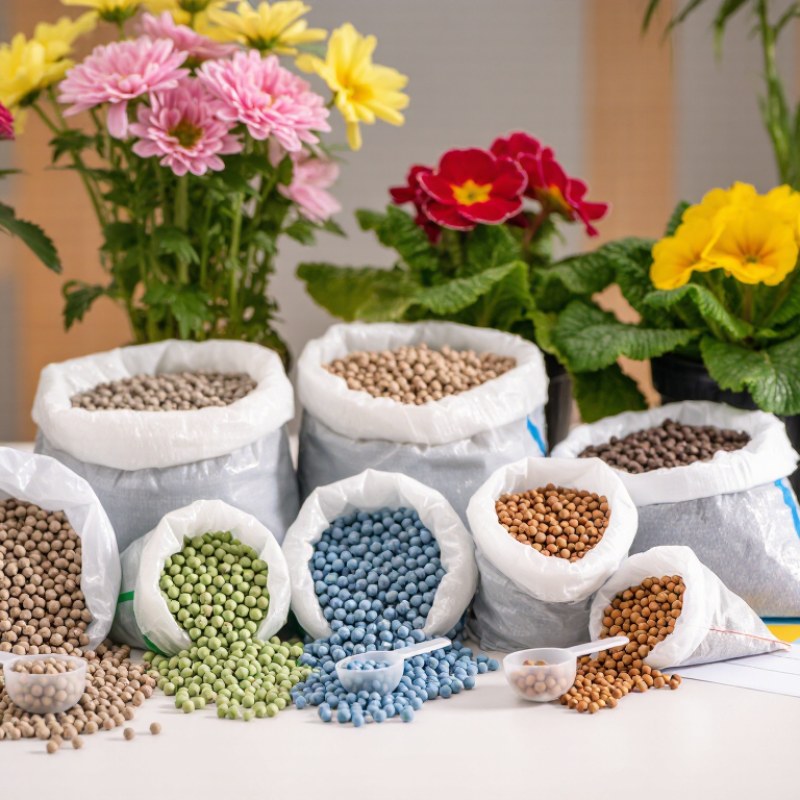
Granular Flower Fertilizer Explained: N-P₂O₅-K₂O Grades and Uses
2026 Top Granular Flower Fertilizer for Global Buyers?
Granular flower fertilizer is identified by three numbers: N-P₂O₅-K₂O. They show the percentage of nitrogen, available phosphate, and soluble potash by weight. A 10-20-10 grade contains 10% nitrogen, 20% phosphate, and 10% potash. The remaining material includes carriers and minor nutrients.
Each grade suits a different growing condition. A 5-10-20 formula can support flowering plants needing stronger potassium during bud formation. A balanced 14-14-14 grade may fit established beds with average nutrient demand. High nitrogen can produce large leaves but fewer flowers. More phosphate is not always better. Soil testing matters.
Apply granules around the root zone, not against stems. Lightly mix them into moist soil, then water thoroughly. For container plants, measure carefully because salts can accumulate in small pots. Granule size also affects spreading accuracy. Uneven particles may create nutrient patches.
Global buyers should request laboratory specifications, nutrient analysis, moisture limits, and recommended application rates. Packaging must resist humidity during long transport. Storage needs a cool, dry, ventilated area. Product performance can change when granules absorb moisture and harden.
A high middle number is no magic bloom switch. I would review soil data before choosing a grade. Even experienced growers sometimes overfeed. Flowers may still suffer when light, drainage, or pollination is poor. Countries also differ in labeling and fertilizer registration requirements, so buyers should verify local rules before import and use.
Choosing NPK Ratios for Flowers: Why 10-10-10 and 14-14-14 Matter
For global buyers, choosing granular flower fertilizer starts with the NPK ratio, not attractive packaging. NPK means nitrogen, phosphorus, and potassium. A 10-10-10 formula supplies each nutrient in balanced proportions. It suits established flower beds with average soil fertility and supports steady leaf growth, root development, and flowering.
A 14-14-14 formula provides more nutrients in the same weight. It can help heavy-feeding annuals, container flowers, and plants growing in tired soil. However, stronger numbers do not always produce better blooms. Excess nitrogen may create soft foliage and fewer flowers. High application rates can also increase salt stress, especially in pots with limited drainage. Read the guaranteed analysis carefully. Then check the granule size and release pattern.
Soil testing should guide the final choice. A garden with sufficient phosphorus may not need a high middle number. In that case, 10-10-10 may be the safer starting point. New transplants often need gentle feeding, while mature flowering plants may accept 14-14-14 during active growth. Apply granules evenly around the root zone, never against stems, and water thoroughly. Weather matters too. Heavy rain can move nutrients away, while dry soil slows release. One purchasing mistake is comparing percentages without comparing application rates. The label’s recommended grams per square meter deserve equal attention. Even experienced growers sometimes overfeed after a disappointing flowering season. That reaction deserves restraint.
2026 Top Granular Flower Fertilizer for Global Buyers: Choosing NPK Ratios for Flowers
NPK fertilizer numbers indicate the percentage by weight of nitrogen (N), phosphate (P₂O₅), and potash (K₂O). Both 10-10-10 and 14-14-14 provide equal nutrient ratios, while 14-14-14 supplies 40% more of each declared nutrient by weight than 10-10-10. Actual application rates should follow the crop, soil test, and local agricultural guidance.
Granule Quality Standards: 2–4 mm Size, Moisture, and Dissolution Rates
For global flower-fertilizer buyers, granule quality begins with controlled sizing. A 2–4 mm range supports smoother blending and more predictable spreading. EN 1235 sieve testing can verify the size distribution, not just the average diameter. In practical inspection, collect samples from the top, middle, and bottom of each bag. Oversized pieces often hide at the bottom. Fine dust may signal abrasion during transport.
Moisture needs a clear contract limit. Many granular formulations target approximately 1–3% moisture, but the correct level depends on salts, coatings, and storage conditions. Excess moisture can cause caking, while overly dry granules may create dust. Measure moisture using a calibrated oven or validated rapid analyzer. The IFA Fertilizer Technical Manual emphasizes consistent sampling and laboratory control for reliable fertilizer testing. Small testing errors can change a shipment decision.
Dissolution should be reported with temperature, water volume, agitation, and test time. “Fast release” is not a usable specification alone. A buyer could request the percentage dissolved after 5, 15, and 30 minutes at 20–25°C. IFA’s 2024 Medium-Term Fertilizer Outlook projects global nutrient demand near 205 million tonnes by 2028, increasing pressure for dependable quality. FAO fertilizer statistics also show the scale of nutrient use worldwide. Flower crops need more than attractive granules. A 2–4 mm particle may look uniform, yet its internal porosity can differ. That is where specifications need rethinking.
2026 Top Granular Flower Fertilizer for Global Buyers? – Granule Quality Standards: 2–4 mm Size, Moisture, and Dissolution Rates
Generic buyer-oriented quality benchmarks for granular flower fertilizers. Values are specification targets or typical quality-control ranges, not universal legal limits; final requirements should follow the destination market and product registration.
| Product Profile | Typical N-P2O5-K2O Grade | Target Granule Size | Moisture at Packing | Dissolution Performance* | Physical Quality Targets | Typical Buyer Application |
| Fast-Soluble | 14-14-14 | 2–4 mm
Minimum 90% within range | ≤2.0% | ≥90% dissolved in 20 minutes
At 20°C, gentle agitation | Crush resistance: ≥3.0 kg/granule
Dust: ≤1.0% | General flowering plants, bedding plants, nursery production, and container-grown ornamentals |
| Bloom-Focused | 10-30-20 | 2–4 mm
Minimum 90% within range | ≤2.0% | ≥85% dissolved in 20 minutes
At 20°C, gentle agitation | Crush resistance: ≥3.0 kg/granule
Dust: ≤1.0% | Flower initiation and blooming programs where a higher phosphorus grade is agronomically appropriate |
| Organic-Mineral | 5-5-5 | 2–4 mm
Minimum 85% within range | ≤8.0% | ≥70% soluble or dispersible in 60 minutes
At 20°C; insoluble organic fraction may remain | Crush resistance: ≥2.0 kg/granule
Dust: ≤3.0% | Soil-based ornamental production and buyers seeking slower nutrient release from organic materials |
| Coated Controlled-Release | 14-14-14 | 2–4 mm
Minimum 90% within range | ≤2.5% | Initial release ≤15% in 24 hours
Release period commonly declared as 3–4, 5–6, or 8–9 months | Coating coverage: ≥98% of granules
Broken coating: ≤2% | Low-frequency maintenance programs for landscaping, nurseries, and long-cycle ornamental crops |
| Potassium-Enhanced | 12-12-24 | 2–4 mm
Minimum 90% within range | ≤2.0% | ≥90% dissolved in 30 minutes
At 20°C, gentle agitation | Crush resistance: ≥3.0 kg/granule
Dust: ≤1.0% | Flowering and ornamental crops requiring relatively higher potassium availability |
| Water-Soluble Granular | 20-20-20 | 2–4 mm
Minimum 90% within range | ≤1.5% | ≥95% dissolved in 15 minutes
At 20°C, gentle agitation | Crush resistance: ≥3.5 kg/granule
Dust: ≤0.5% | Professional fertigation, nursery stock, and applications requiring rapid nutrient availability |
Global Compliance Guide: EU, US, and ISO Requirements for Fertilizer Buyers
Global buyers of granular flower fertilizer need more than a nutrient guarantee. They need a compliance file that survives customs, laboratory review, and local registration. The International Fertilizer Association’s 2024 Medium-Term Fertilizer Outlook projects global nutrient demand could approach 205 million tonnes by 2028. That growth increases scrutiny of product quality and environmental claims. Under EU Fertilising Products Regulation (EU) 2019/1009, suppliers must define the Product Function Category, document Component Material Categories, and meet limits for contaminants, pathogens, and physical safety. CE marking may require an appropriate conformity assessment. A translated label is not enough.
The United States uses a different route. Fertilizer registration commonly occurs at state level, following AAPFCO model guidance. Buyers should request a guaranteed analysis, ingredient statement, net weight, application directions, and heavy-metal test results. EPA rules may also apply when products make pesticide or plant-growth claims. Be careful with “organic” wording. It can trigger additional requirements. ISO 8157 helps standardize fertilizer terminology, while ISO 18644 supports controlled-release fertilizer specifications. ISO alignment is useful, but it does not automatically replace EU or US law.
A practical purchase file should include batch numbers, retained samples, certificates of analysis, safety data, and traceable raw-material records. In audits, small errors often matter: inconsistent nitrogen values, unclear micronutrient units, or a missing country-specific label. Some suppliers still treat ISO testing as a universal passport. It is not. Buyers should verify the latest national rules before shipment.яр
Supplier Evaluation in 2026: Bulk Pricing, COA Data, Packaging, and Logistics
2026 Top Granular Flower Fertilizer for Global Buyers?
Supplier Evaluation in 2026: Bulk Pricing, COA Data, Packaging, and Logistics
Global buyers should compare more than the quoted price per metric ton. Request pricing by volume, minimum order quantity, payment terms, and delivery basis. A low offer may exclude inland freight, pallet fees, or export documents. Ask for a firm validity period, because raw material costs can change quickly.
A reliable supplier should provide a recent certificate of analysis for each production batch. Check nitrogen, phosphate, potassium, moisture, particle size, pH, and declared micronutrients. For international shipments, review heavy metal limits and test methods with an independent laboratory when required. The COA should match the product label and purchase contract. Small differences matter.
Packaging needs practical testing. A 25-kilogram woven bag with an inner liner can reduce moisture exposure during long sea transport. Confirm stitching, pallet dimensions, container loading plans, and storage instructions. Ask whether bags remain intact after vibration and repeated handling. Logistics teams should clarify lead time, port options, Incoterms, and document preparation. My own early mistake was trusting a polished sample without checking batch consistency. The sample performed well, but later granules varied in size. That experience changed my evaluation process. Request retention samples, loading photos, and shipment records before placing a large order. No supplier evaluation is perfect. Review the evidence again before renewal.