

What Are the Top Smart Paging Machine Suppliers in China?
Smart Paging Machine suppliers in China serve restaurants, hospitals, factories, hotels, and service counters. Their products may look similar in photographs. Performance often depends on details: signal range, receiver capacity, battery life, software options, and installation support. A pager that works across a quiet café may struggle in a busy clinic with concrete walls. Small differences matter.
Queueing theory helps explain why paging systems deserve careful evaluation. MIT operations researcher John D. C. Little is known for Little’s Law, commonly written as “L = λW.” It connects the average number of people in a system with their arrival rate and waiting time. The relationship is not a product review, but it offers a useful lens: paging should support smoother service, not merely send a signal. That distinction is easy to overlook.
This guide compares Chinese suppliers through practical criteria, including product range, customization, communication protocols, quality documentation, and after-sales service. Buyers should also ask about sample testing, spare parts, and compatibility with existing workflows. A polished catalog is not proof of dependable performance. No ranking is perfect. Supplier information can change, and published claims may not show how devices perform in a real venue. Treat comparisons as a starting point, then verify specifications and support directly before choosing a Smart Paging Machine supplier.
What Smart Paging Machines Do and Where They Are Used
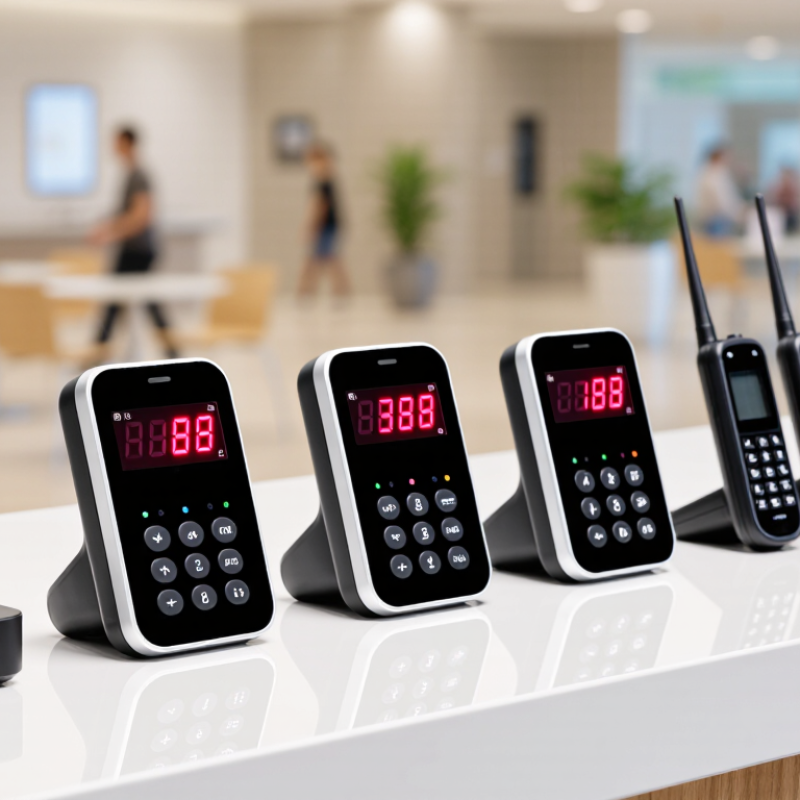
A smart paging machine connects a staff member’s call station with a guest’s pager or a shared display. When a number is entered, the system sends a wireless alert, often with a vibration, light, or short tone. The guest can wait nearby without standing in a crowded line. Less shouting.
These systems are common in food courts, clinics, service counters, and busy repair shops. A café might hand out a small pager when an order needs extra preparation. In a clinic, a screen can show a ticket number when a room is ready. At a service desk, staff can call the next visitor without repeatedly leaving the counter. The exact setup depends on how people move through the space.
A practical system should be easy to hear or see, simple for staff to operate, and suitable for the venue’s layout. Check pager range in the actual building; thick walls and metal shelving can weaken signals. Battery life and charging routines matter, too. Not magic. A paging system can reduce confusion, but it cannot fix unclear service procedures. Some venues may find a clear display and a spoken call more useful. That trade-off deserves a real-world trial.

What Smart Paging Machines Do and Where They Are Used
A typical customer-paging cycle has four steps, with one event at each step. Smart paging systems are commonly used in restaurants, cafés, clinics, hospitals, and service counters to notify people when assistance or service is ready.
The chart shows events in a single illustrative paging cycle, not market share or supplier performance.
How Smart Paging Machines Work and Which Features Matter
A smart paging machine links a staffed counter to small, numbered receivers. When a customer is ready, staff enter a number at the transmitter. The receiver then vibrates, flashes, or beeps when its turn arrives. The sequence is simple. In a crowded food court, that lets guests wait at a table instead of clustering around the pickup counter. For staff, clear call signals can reduce repeated name-calling and missed orders. The system still depends on correct numbering and staff using it consistently.
Useful features start with dependable indoor range, strong battery life, and receivers that are easy to clean and recharge. Check how many pagers one transmitter supports, whether alerts can be adjusted, and how walls or kitchen equipment affect signal coverage. Range matters. Grand View Research estimated the global queue management system market at USD 651.7 million in 2023 and projected a 5.9% compound annual growth rate from 2024 to 2030. That estimate covers broader queue-management systems, not paging devices alone, so it should not be treated as pager sales data. A practical trial in the actual dining area is still valuable; specifications rarely reveal every dead spot. One overlooked issue: guests may leave a pager behind, so clear return instructions and spare units help keep service moving.
| Supplier Category | Typical Paging Method | How the Machine Works | Features to Compare | Common Applications | What to Verify Before Purchase |
|---|---|---|---|---|---|
| Integrated packaging-line equipment manufacturers | Conveyor-based singulation with sensors and controlled spacing | Products enter on a feed conveyor; guides and belts separate overlapping items, while sensors detect gaps and regulate the transfer speed. | Line-speed synchronization, adjustable guides, product-changeover time, sensor type, guarding, and control-system compatibility | Food, personal-care, and household-goods packaging lines | Request a test using actual products and confirm the machine can synchronize with upstream and downstream equipment. |
| Conveyor and material-handling system integrators | Accumulation, metering, and timed release | A buffer section collects products; a metering device releases them at controlled intervals to create a consistent flow for the next process. | Buffer capacity, release accuracy, conveyor width, accumulation pressure, jam detection, and integration options | Carton handling, case packing, and production lines with uneven product flow | Check performance at both normal and peak throughput, including how the system behaves during stoppages and restarts. |
| Vision-guided automation suppliers | Camera-based detection with servo or robotic positioning | A vision system locates products and identifies their position or orientation; motion controls then place or space them according to programmed settings. | Camera resolution, lighting, detection reliability, recipe storage, changeover controls, and response to product variation | Products requiring orientation, alignment, or precise placement before packaging | Test variations in color, surface finish, packaging, and lighting; request documented acceptance criteria for detection performance. |
| Labeling and print-and-apply equipment suppliers | Sensor-triggered product spacing for label application | Photoelectric sensors detect each item and trigger a label applicator at the required position as the product passes through the machine. | Label placement tolerance, sensor adjustment, applicator speed, encoder support, reject handling, and format changeover | Packages requiring labels, date codes, or identification before case packing | Confirm the machine handles the intended label stock, package geometry, line speed, and required placement tolerance. |
| Compact or modular machine builders | Adjustable belts, side guides, or compact metering mechanisms | Mechanical guides and driven belts separate and position products within a small footprint; settings are adjusted for different product sizes. | Footprint, tool-free adjustment, accessible cleaning points, guarding, and ease of maintenance | Small and medium production lines, limited floor space, or standalone packaging stations | Measure the available installation space and verify that routine cleaning, jam clearance, and maintenance access are practical. |
| Custom automation engineering providers | Application-specific combination of conveyors, sensors, and controls | The supplier designs a paging arrangement around the product, required line layout, and interfaces with existing production equipment. | Engineering documentation, interface definition, safety design, commissioning support, spare parts, and service response | Unusual product shapes, non-standard layouts, or lines requiring multiple equipment interfaces | Review the scope of supply, drawings, acceptance tests, safety documentation, and responsibilities for integration and commissioning. |
| Selection criteria for any supplier | Match the paging principle to product and line conditions | Paging performance depends on product dimensions, surface friction, stability, incoming flow, required spacing, and the downstream machine’s operating speed. | Verified throughput, repeatability, changeover range, cleanability, safety compliance, controls, warranty, and local support | Any production line needing controlled product spacing or a more consistent feed | Ask for a product trial, a written performance specification, a reference installation, and a clear plan for training and after-sales service. |
How to Evaluate Smart Paging Machine Suppliers in China
What Are the Top Smart Paging Machine Suppliers in China?
How to Evaluate Smart Paging Machine Suppliers in China
Choosing a supplier starts with your site, not a product brochure. Map the paging distance, wall materials, noise levels, number of users, and required message types.
Deloitte’s 2024 Smart Manufacturing Survey found that 86% of surveyed manufacturing executives expect smart manufacturing to drive competitiveness within five years. That makes dependable alerts useful, but a polished demo is not proof of reliable performance. Test it live.
Ask suppliers to demonstrate coverage across your actual work areas, including corners and rooms behind concrete walls. Check alert delay, simultaneous message handling, battery backup, and recovery after a network interruption. Request a written test record with timestamps and any signal dead zones. Review integration options, software updates, user permissions, warranty terms, and local technical support. No checklist catches every site-specific blind spot, so include operators in the trial.
Tips: Send a test alert during a busy shift. Compare delivery times at the farthest receiver. Ask for references from customers with similar buildings and workloads. Confirm that manuals, spare parts, and response times are available in writing.
Leading Smart Paging Machine Suppliers and Their Capabilities
China’s smart paging suppliers are best compared by engineering depth, not catalog size. Strong teams combine RF design, embedded firmware, receiver integration, and production testing. They should demonstrate paging range inside a noisy clinic or restaurant, not only in an open corridor. Ask for measured alert latency, battery endurance, channel capacity, and records from repeated pairing tests. Small details matter. GSMA Intelligence’s The Mobile Economy 2024 projects 5.8 billion cellular IoT connections worldwide by 2030. This signals broader demand for connected devices, but it is not a paging-market forecast.
Supplier capabilities differ. Some specialize in call buttons and wrist receivers; others build systems with gateways, displays, and software interfaces. For complex deployments, request evidence of API compatibility, offline operation, data-retention controls, and service response times. A capable manufacturer should provide sample units, wiring diagrams, firmware-change records, and a clear process for replacing failed receivers. Ask how RF performance is checked around metal shelving and concrete walls. Treat quoted maximum range cautiously; real buildings are less forgiving. There is no perfect test script, and that gap deserves discussion. Compare pilot results under your actual floor plan before approving volume production.
How to Compare Suppliers for Different Business Needs
Compare smart paging machine suppliers against the work your site actually performs. A clinic may need quiet, room-specific alerts; a busy service counter needs visible signals and fast resets. List peak users, paging zones, alert distance, and expected daily calls before requesting quotes. Test the real floor. Concrete walls and kitchen noise can expose gaps that a showroom demo misses.
MHI’s 2024 Annual Industry Report found that 55% of surveyed supply-chain leaders planned to increase technology investment over the following two years. That signals growing interest, not proof that every paging feature pays off. Ask suppliers to demonstrate alert delivery time, coverage, simultaneous calls, and recovery after a power interruption. Request results from a site with similar layout and workload. A neat brochure can still hide weak evidence.
For a small operation, prioritize simple setup, clear instructions, and readily available replacement parts. Multi-site businesses may need centralized user management, different alert groups, and documented software updates. Check whether the system connects with your existing order or service workflow, and confirm which integration costs extra. Ask for warranty terms, repair turnaround, and a sample maintenance schedule. That matters. I would also ask staff to trial the equipment during a real shift; their feedback may reveal awkward buttons or alerts that are too easy to miss.

