
What Is a Fruit Mill and How Does It Work?

What Is a Fruit Mill and How Does It Work?

A fruit mill is a practical machine used to separate fruit pulp from skins, seeds, and unwanted fibers. It appears in small farm kitchens, cider rooms, wineries, and commercial processing lines. The basic idea is simple. Prepared fruit enters a hopper. A rotating paddle or rotor presses it against a perforated screen. Soft pulp passes through the openings, while tougher material moves toward the outlet.

Food-processing engineer Dr. Robert W. Kerr describes the principle clearly: “A fruit mill does not rescue poor preparation; it reveals the quality of the fruit and the process.” This observation matters. Ripe apples, berries, tomatoes, and stone fruits behave differently inside the same machine. A soft pear may pass smoothly, while a fibrous quince can slow the rotor and leave a rougher pulp. Screen size, rotor speed, fruit temperature, and moisture all influence the final texture.

The process is not completely effortless.

Operators usually wash and inspect the fruit before milling. Some fruits need chopping, blanching, or pit removal. Others can enter whole, depending on the mill’s design and manufacturer’s instructions. The machine then creates a smoother base for sauces, purées, juices, jams, and fermented products.

Still, a fruit mill has limits. It cannot correct bruising, spoilage, poor sanitation, or unsuitable settings. Cleaning also requires attention, especially around screens, seals, and hidden channels. Understanding these details makes the equipment easier to choose, operate, and maintain. It also prevents a common mistake: assuming that a faster machine always produces better fruit pulp.
What Is a Fruit Mill and How Does It Work?

What Is a Fruit Mill?

What Is a Fruit Mill?

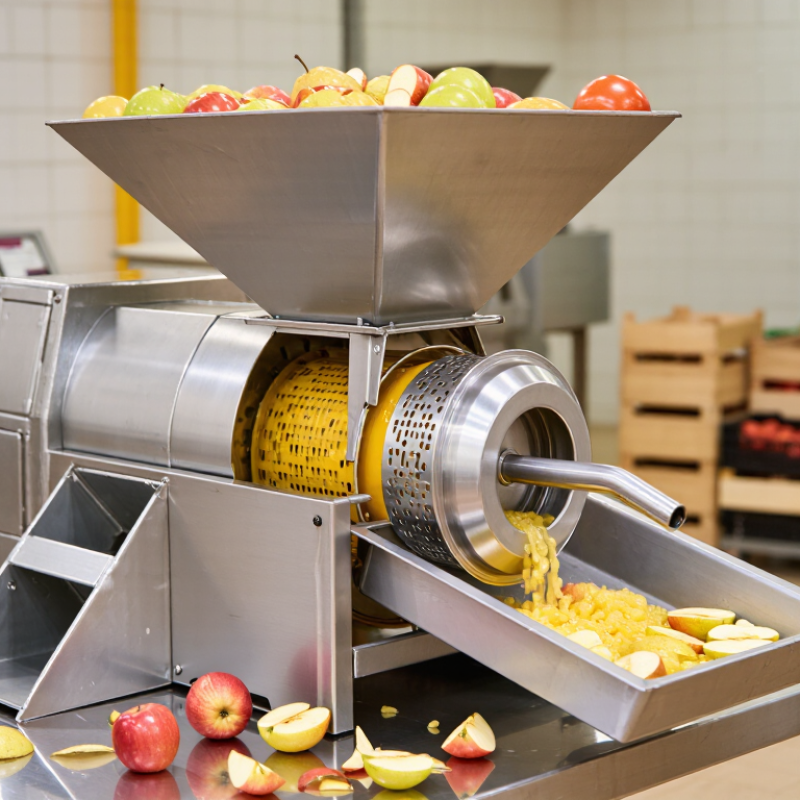
A fruit mill is a food-processing tool that separates soft fruit pulp from skins, seeds, and stems. It usually has a hopper, a perforated bowl, and a rotating paddle or auger. As fruit enters the hopper, the moving part presses it against the screen. Smooth pulp passes through the small openings. Skins, seeds, and tougher fibers leave through a separate outlet.

A fruit mill is different from a blender. A blender breaks everything into a liquid mixture, including many seeds and skins. A mill gives better control over texture and waste. This makes it useful for preparing applesauce, tomato purée, berry fillings, and other fruit-based foods. The screen size matters. A fine screen creates a smoother result, while a wider screen allows more fiber to remain.

Good results depend on preparation. Soft, cooked fruit usually moves through the mill more easily than firm raw fruit. Cutting large pieces prevents clogging. I have found that overloading the hopper produces uneven pulp and extra waste. It is not foolproof. Some small seeds may pass through, and very fibrous fruit can require a second pass. Clean the screen, paddle, and collection bowl soon after use. Dried pulp becomes surprisingly difficult to remove. A fruit mill works best when its parts match the fruit and the desired texture.

What Are the Main Parts of a Fruit Mill?

A fruit mill turns whole or cut fruit into pulp, juice, or a smoother mash.

Its main parts work as one controlled path. The hopper receives fruit and limits sudden loading. A feed screw or gravity chute then moves it toward the milling chamber. Inside, rotating paddles, beaters, or a perforated rotor press fruit against a screen. The screen controls particle size. Small openings create a finer pulp, while larger openings allow more fiber and skin to pass.

The drive motor supplies rotation through a shaft, coupling, and bearings. A speed controller can reduce splashing and protect soft fruit. The frame supports these parts, while guards reduce contact risks. Food-contact surfaces should be smooth, corrosion-resistant, and easy to inspect. Codex Alimentarius’ General Principles of Food Hygiene, revised in 2022, emphasizes hygienic design, cleaning access, and contamination control. Seals around the shaft matter greatly. A tiny gap can trap pulp, water, and microorganisms. It is an easy detail to underestimate.

The outlet separates the processed pulp from skins, seeds, or coarse fibers. Some mills use adjustable pressure or interchangeable screens for different fruits. FAO’s The State of Food and Agriculture 2019 reported that about 14% of food is lost between harvest and wholesale. Efficient milling may help recover more usable material, but it cannot fix poor fruit quality. In practice, operators still need to check temperature, screen wear, and cleaning time. I would not assume a faster rotor always gives better results. Sometimes, it only creates foam and heat.

How Does a Fruit Mill Work Step by Step?

A fruit mill is a food-processing tool that turns prepared fruit into smooth pulp. It commonly separates flesh from skins, seeds, and tougher fibers. The machine may be hand-operated or powered, but the working principle remains similar.

The process starts with ripe fruit that has been washed and inspected. Remove damaged areas, stems, and large stones when required. Cut larger fruit into smaller pieces. The pieces then enter the hopper, where a rotating paddle or auger presses them against a perforated screen. Soft pulp passes through the small openings and falls into a bowl or container. Skins, seeds, and coarse fibers move toward a separate outlet.

The pressure must remain steady. Too much force can push unwanted material through the screen.

Screen size controls the final texture. A fine screen produces smoother purée, while a wider screen allows more fiber to remain. In practical processing, a small test batch is useful because fruit varieties behave differently. Very ripe fruit may flow easily, but firmer fruit can clog the openings. Cleaning should happen immediately after use, especially around the screen and seals. Warm residue becomes difficult to remove. The first pass may also leave usable pulp behind, so checking the discarded material can improve yield. This step is easy to overlook.

Bluntly, no fruit mill works perfectly without adjustment.

What Types of Fruit Mills Are Available?

A fruit mill is a food-processing tool that crushes, separates, or purées fresh fruit. Its design depends on the fruit and the desired result. A hand-crank food mill uses a perforated screen and rotating blade. The blade presses cooked or softened fruit through the screen. Skins and larger seeds remain behind. This type suits small batches of apples, berries, tomatoes, and stone fruits.

Electric fruit mills handle larger quantities with less manual effort. A motor turns paddles or rollers inside a chamber. The machine pushes fruit through a selected screen while removing unwanted solids. Some models combine crushing and pulping, which helps prepare juice, sauces, purées, or cider. Crusher-destemmer machines are useful for grapes and similar fruit. They remove stems before pressing. Pulper mills work well with soft fruits, but they may struggle with firm skins or large pits. Always remove hard pits when the machine instructions require it. A damaged screen can affect texture and safety.

Tips: Match the screen size to your recipe. A fine screen creates smoother purée, while a wider screen keeps more pulp. Wash fruit carefully and inspect every piece before milling. Do not overload the hopper, even when the motor sounds strong. In my experience, a slower feed produces cleaner separation. It also reduces splashing. Some fruit mills leave more waste than expected, so testing a small batch first is sensible. Temperature matters too; warm fruit usually passes through more easily than chilled fruit.

What Is a Fruit Mill and How Does It Work? - What Types of Fruit Mills Are Available?

A fruit mill is a food-processing device that crushes, mashes, or separates fruit flesh from skins, seeds, and stems. The table below compares common fruit-milling options and their typical operating characteristics.

Fruit Mill Type How It Works Typical Fruits Typical Capacity Output Advantages Limitations
Manual Rotary Food Mill A hand-cranked blade or paddle presses cooked or softened fruit through a perforated disc while skins and larger seeds remain behind. Apples, tomatoes, berries, plums, peaches, and cooked pears. Approximately 1–3 kg per batch, depending on hopper size and operator speed. Smooth purée with adjustable coarseness when interchangeable screens are used. Low cost, no electricity, easy control, and gentle processing. Requires manual effort; most models are unsuitable for hard raw fruit or continuous production.
Electric Fruit Pulper A motor-driven rotor pushes softened fruit against a perforated screen, separating pulp from skins, fibers, and some seeds. Tomatoes, berries, grapes, mangoes, peaches, plums, and cooked apples. Common small-scale units process roughly 50–300 kg per hour. Consistent pulp suitable for sauces, purées, jams, juices, and fruit fillings. Faster and less labor-intensive than a manual mill; screens can often be changed. Needs electricity, cleaning after use, and suitable pre-softening for firm fruit.
Fruit Crusher or Destemmer Rotating paddles, rollers, or shafts break fruit and may remove stems before pressing or fermentation. Grapes, apples, pears, berries, and other soft fruit used for juice or cider. Manual models often handle about 10–50 kg per hour; powered models can process several hundred kilograms per hour. Crushed fruit or must, usually retaining skins and some seeds for later pressing. Prepares large quantities quickly and reduces preparation time before pressing. Does not usually produce a fine purée; excessive crushing can release unwanted seed compounds.
Hammer Mill High-speed hammers repeatedly strike fruit against a screen, reducing it to a finely broken mash. Apples, pears, citrus waste, berries, and fruit processing by-products. Typically used for continuous processing from several hundred kilograms to multiple tonnes per hour. Fine mash for juice extraction, animal feed, composting, or further industrial processing. High throughput and effective size reduction for commercial operations. Higher energy use, greater noise, and more risk of over-processing delicate fruit.
Stone or Disc Mill Fruit is rubbed or ground between rotating and stationary surfaces; the gap determines the particle size. Soft fruit, olives, grapes, apples, and selected fruit-based ingredients. Small units generally process tens of kilograms per hour; industrial units vary widely by design. Coarse to fine mash, depending on the disc gap and feed condition. Adjustable particle size and effective continuous grinding. May generate heat or excessive shear and is not ideal for fruit with hard pits unless pits are removed first.
Centrifugal Fruit Separator A rapidly rotating basket or screen uses centrifugal force to separate liquid and fine pulp from larger solids. Berries, grapes, tomatoes, citrus segments, and soft seedless fruit. Domestic units usually process a few kilograms per minute; commercial capacity depends on rotor size. Juice or relatively thin pulp with separated solid residue. Fast separation and convenient for liquid-focused applications. Less suitable for thick purée; foam, oxidation, and screen clogging may occur with some fruits.

How a Fruit Mill Processes Fruit

Processing Stage Typical Action Purpose
Preparation Fruit is washed, trimmed, and cut into manageable pieces. Hard pits are removed when required. Protects the equipment and improves uniform feeding.
Softening Firm fruit may be steamed, blanched, or lightly cooked before milling. Makes the flesh easier to crush and helps release pulp.
Milling A rotor, paddle, roller, hammer, or grinding surface breaks the fruit and moves it toward a screen. Reduces the fruit to pulp, mash, or juice.
Screening Perforated screens allow pulp or liquid to pass while retaining skins, stems, fibers, and larger seeds. Controls texture and separates unwanted solids.
Collection The processed pulp or juice is collected for cooking, pressing, fermenting, preserving, or packaging. Creates the desired finished ingredient or product.

Capacity figures are typical ranges and vary with fruit softness, preparation method, screen size, motor power, feed rate, and whether the machine is intended for household, farm, or commercial use.

How Are Fruit Mills Used and Maintained?

A fruit mill separates edible pulp from skins, seeds, and stems through rotating paddles or a perforated screen. Operators feed washed fruit into the hopper, then adjust speed and screen size for the crop. Softer fruit needs gentler pressure. Harder fruit may require slower feeding. The process looks simple, but poor adjustment can increase seed breakage and bitterness.

Fruit mills are used for sauces, juices, purées, cider, and preserves. Clean fruit should enter the machine steadily, without overloading the hopper. This protects the motor and improves pulp consistency. FAO reports that about 13.2% of food is lost between harvest and wholesale globally. Careful milling can reduce avoidable processing losses, although it cannot correct damaged or poorly stored fruit.

Maintenance begins immediately after production. Remove pulp before it dries, then wash screens, paddles, seals, and food-contact surfaces with approved methods. Inspect bearings, belts, fasteners, and electrical connections on a planned schedule. UNEP’s Food Waste Index Report 2024 estimated 1.05 billion tonnes of food waste in 2022, showing why small efficiency gains matter. In practice, cleaning schedules are rarely perfect. A missed screen inspection may quietly reduce yield for days. Operators should record unusual noise, vibration, temperature, and pulp texture, then adjust the maintenance plan using those observations.