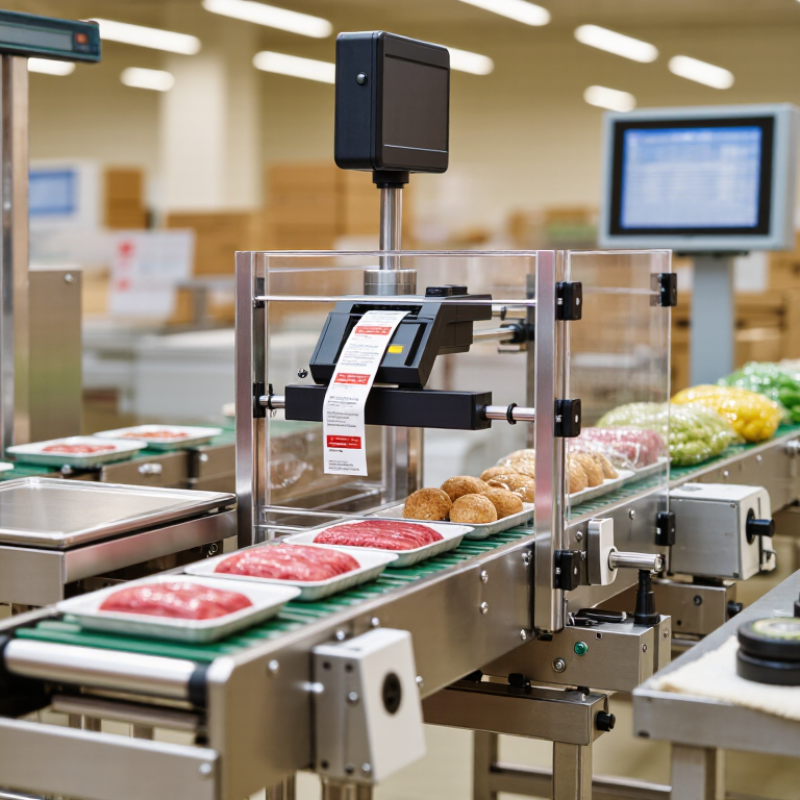
An Automatic Price Labelling Machine is more than a device that prints and applies prices. It connects weighing, product identification, label printing, and placement in one controlled workflow. In a busy supermarket, a package may arrive every few seconds. The machine must read the item, calculate the correct price, print clear details, and apply the label without damaging the product.
Packaging expert Pierre Pienaar has often described packaging as “the silent salesperson.” His observation applies strongly to price labels. A clean label communicates price, weight, product information, and traceability before staff or customers ask questions. Yet the machine is not automatically perfect. Incorrect product data, poor calibration, or a fading print ribbon can create expensive mistakes. Small errors matter.
Real performance depends on more than speed. Operators should examine label adhesion, barcode readability, weighing accuracy, printer resolution, and software integration. Chilled meat, bakery products, and fresh produce may require different label materials and settings. Moisture can weaken adhesion. Uneven surfaces can distort barcodes. These details are easy to overlook.
A reliable Automatic Price Labelling Machine should support consistent output while allowing trained staff to inspect and adjust the process. Experience still matters. A well-designed system can reduce repetitive work and improve presentation, but it cannot replace careful data control. That limitation deserves attention. The best results come from combining dependable equipment, verified information, routine maintenance, and human judgment.
Definition and Core Functions of an Automatic Price Labelling Machine
What Is an Automatic Price Labelling Machine?
An automatic price labelling machine prints and applies price labels to products with limited manual handling. It usually combines a label printer, applicator, conveyor, sensors, and control software. The machine can print prices, barcodes, product names, weights, dates, or batch details. A sensor detects each item and positions the label on a chosen surface. This improves consistency on cartons, trays, jars, and packaged goods. In busy retail or food production areas, stable placement also makes scanning faster.
Its core functions include label feeding, variable-data printing, product detection, accurate application, and basic process monitoring.
Some systems connect with weighing equipment or inventory software. Others verify barcode readability before products leave the line. In practice, technicians must adjust speed, label dimensions, pressure, and product spacing. Small errors can cause wrinkles or misplaced labels.
I have found that label material matters more than many buyers expect. Dust, curved surfaces, and temperature changes can reduce adhesion. Automatic does not mean maintenance-free.
How It Works: Weighing, Pricing, Printing, and Applying Labels
What Is an Automatic Price Labelling Machine?
How It Works: Weighing, Pricing, Printing, and Applying Labels
An automatic price labelling machine combines a scale, pricing software, printer, and applicator. The product enters on a moving conveyor. Load cells measure its weight within seconds. The system then matches that weight with the stored product code and price. It calculates the selling price, often using weight-based rules. Small errors matter. A few grams can affect thousands of labels.
The printer produces a label showing the product name, weight, price, date, and barcode. GS1 reports that barcodes support more than six billion scans each day worldwide. That figure explains why clear printing and reliable data exchange are essential. The applicator places each label on a selected surface, such as a tray corner or sealed pouch. Sensors check product position before applying it. Poor alignment can still happen.
According to PMMI’s automation research, labor availability remains a major reason companies invest in packaging automation. Automatic labelling reduces repetitive handling and improves output consistency. However, it does not remove operational responsibility. Staff must verify scale calibration, product settings, label rolls, and printer quality. Dust, moisture, or a wrinkled package may confuse sensors. The machine can be fast, but not always intelligent. Regular checks remain necessary.
Key Specifications: 203/300 dpi, 30–120 Packs per Minute, and Label Size
An automatic price labelling machine applies printed price, weight, batch, or barcode labels to products at a controlled speed. Its key specifications often include 203 or 300 dpi resolution, 30–120 packs per minute, and supported label dimensions. A 203 dpi printhead suits readable prices and standard barcodes. A 300 dpi unit produces sharper small text and dense symbols. It may be unnecessary for large labels.
Speed needs practical testing. The stated 30–120 packs per minute usually assumes consistent product spacing, stable conveyor movement, and short label travel. PMMI’s 2024 packaging machinery outlook highlights automation, changeover time, and line integration as major purchasing concerns. Therefore, a machine rated at 120 packs per minute may deliver less in a mixed-product line. Product shape matters. So does operator handling.
Label size is equally important. Measure the label width, height, gap, roll diameter, and core diameter before selection. A narrow label can reduce waste, but it may leave limited space for a barcode and price. Smithers’ digital packaging research continues to identify variable data and shorter production runs as important growth drivers. This supports flexible printing, but flexibility can complicate calibration. A sensor may miss glossy film. Dust may affect registration. Real-world trials remain essential, even when the specification sheet looks convincing.
What Is an Automatic Price Labelling Machine?
An automatic price labelling machine applies printed price, barcode, weight, or product information labels to packaged goods. Typical specifications include 203 or 300 dpi printing, throughput from 30 to 120 packs per minute, and label dimensions selected according to the product and applicator format.
Specification
Typical value
Practical meaning
Print resolution
203 or 300 dpi
203 dpi suits standard text and barcodes; 300 dpi provides finer print detail.
Throughput
30–120 packs per minute
Actual speed depends on product spacing, label position, conveyor speed, and print content.
Label size
Application-specific
The width and length are selected to match the package surface, barcode, and required information.
The chart shows the stated operating-speed range and its midpoint: 30, 75, and 120 packs per minute. These are reference points rather than a guaranteed production rate.
Barcode Standards: GS1-128, EAN-13, and Variable-Weight Pricing
What Is an Automatic Price Labelling Machine?
An automatic price labelling machine weighs, calculates, prints, and applies product labels. It supports faster checkout preparation and clearer shelf information. In busy food departments, the machine may process wrapped meat, cheese, fruit, or prepared meals within seconds. GS1 reports that more than five billion barcode scans occur worldwide each day. That volume explains why accurate symbols matter.
EAN-13 is common for fixed-price retail products. It normally identifies one product and links to stored price data. GS1-128 carries more information, including batch references, dates, and logistics details. It is useful when traceability matters across cartons and distribution points.
Variable-weight pricing needs closer control. The label can combine weight, unit price, total price, and product identity. A small scale error can create a large inventory mismatch. Not every machine handles every barcode format equally well. This point is often underestimated.
Tips:
Confirm the scanner supports your required symbology before purchase. Test labels on wet, curved, and chilled packaging. Check print contrast daily. GS1’s General Specifications recommend strong contrast and reliable quiet zones around barcodes. Keep the scale calibrated, but do not trust calibration alone. Operators should compare displayed weight with a verified reference item. In practice, rejected labels still happen. Review error logs weekly, because real production is less perfect than demonstrations. A clear workflow is usually more valuable than extra automation.
Selection and Maintenance: Hygiene, Accuracy, Integration, and ROI
What Is an Automatic Price Labelling Machine?
An automatic price labelling machine prints and applies price, weight, date, or barcode labels. It uses sensors to identify each product’s position and size. In busy food operations, selection should begin with hygiene, not speed. The World Health Organization estimates that contaminated food causes 600 million illnesses and 420,000 deaths worldwide each year. The machine should use corrosion-resistant steel, sealed electrical parts, and tool-free belt removal. These details make daily cleaning faster. FDA Food Code 2022 also emphasizes cleanable surfaces around exposed food. Small gaps can become serious cleaning problems.
Accuracy requires more than sharp printing. Choose systems with stable label placement, barcode verification, and automatic reject functions. The CDC estimates that foodborne illness causes about 48 million illnesses, 128,000 hospitalizations, and 3,000 deaths annually in the United States. Accurate labels support traceability and reduce costly identification mistakes. GS1 General Specifications provide a useful framework for consistent product and barcode data. Still, database errors can defeat excellent hardware. That part is often underestimated.
Integration affects return on investment. The labeler should exchange product, price, lot, and date data with ERP, warehouse, or point-of-sale systems. Check communication protocols before purchase. Measure labour minutes, giveaway, rework, downtime, and rejected labels for at least four weeks. PMMI packaging guidance repeatedly highlights automation, connectivity, and workforce efficiency as major investment drivers. Yet projected payback is not guaranteed. Operators still need training, calibration, cleaning records, and spare sensors. A perfect machine does not exist. Practical maintenance usually matters more than impressive specifications.