
10 Best Fruit and Vegetable Processing Line Suppliers
Demand for reliable fruit and vegetable processing line equipment is rising as producers seek longer shelf life, lower waste, and stronger product consistency. FAO’s Food Outlook 2024 highlights continuing pressure on global food systems, including volatile supply chains and changing consumer demand. These pressures make practical processing capacity increasingly important.
The UNEP Food Waste Index Report 2024 also shows that food waste remains a major global challenge. Efficient washing, sorting, cutting, drying, juicing, and packaging can help processors protect more raw materials. A well-designed line should reduce bruising, preserve nutrients, and maintain hygienic conditions from receiving to final packing. Small details matter. Stainless-steel contact surfaces, cleanable conveyors, adjustable cutting systems, and accurate temperature controls can affect daily production results.
This guide reviews 10 leading fruit and vegetable processing line suppliers through equipment quality, engineering experience, automation, after-sales service, and customization capability. Market studies from Grand View Research and Mordor Intelligence indicate continued growth in food-processing equipment, although estimates differ because market boundaries are defined differently. That limitation deserves attention.
The best supplier is not always the largest one. A regional processor may need compact equipment, while an industrial factory may require continuous high-capacity production. Installation support, spare-part availability, operator training, and documented testing are equally important. No ranking is perfect. Supplier performance can vary by project, crop type, factory layout, and local service resources. This overview therefore focuses on verifiable capabilities and realistic purchasing considerations, helping buyers compare suppliers before investing in a complete processing solution.
Fruit and Vegetable Processing Line Suppliers: Industry Overview
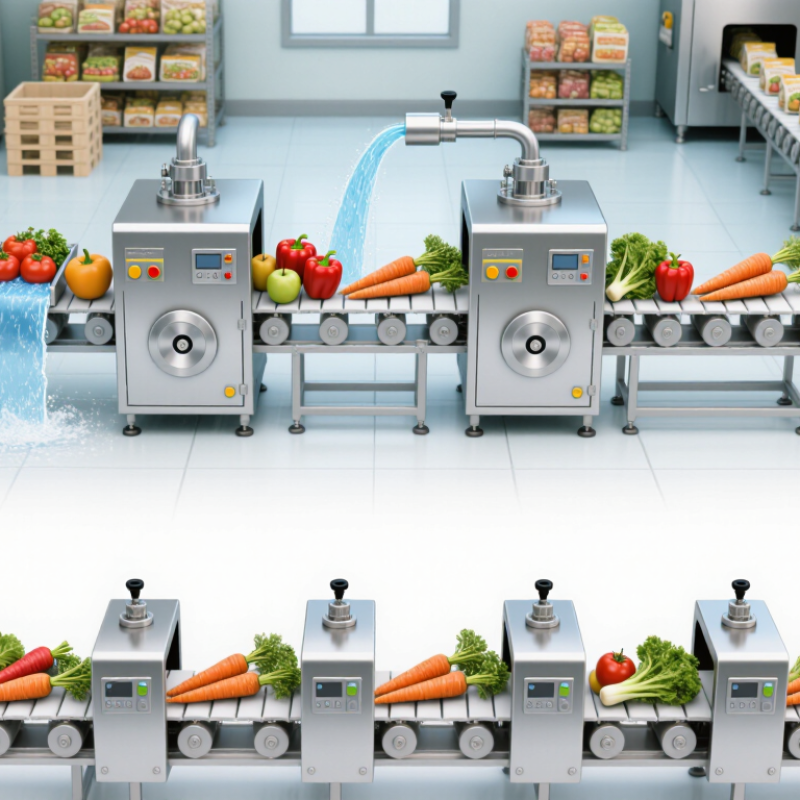
Fruit and vegetable processing line suppliers serve a market shaped by nutrition, waste reduction, and labor efficiency. The FAO and WHO recommend at least 400 grams of fruit and vegetables daily for adults. This target keeps demand strong across washing, sorting, cutting, blanching, freezing, drying, and pureeing equipment.
UNEP’s Food Waste Index Report 2024 estimated that 1.05 billion tonnes of food were wasted in 2022. Processing lines can reduce losses by converting damaged-looking produce into juices, sauces, frozen pieces, or shelf-stable products. Practical suppliers therefore offer hygienic designs, adjustable conveyors, gentle handling, and traceable control systems. Small details matter. A poorly placed drain can create sanitation problems. An undersized washer can slow an entire factory.
Industry buyers should compare throughput, water consumption, product yield, maintenance access, and local technical support. FAO food-loss studies repeatedly identify storage, handling, and processing gaps as major causes of waste in developing supply chains. Suppliers with pilot-testing facilities can reveal these weaknesses before installation. That experience is valuable, though not always perfectly transferable between crops. A mango line and a carrot line may require very different cutting pressure, temperature control, and cleaning cycles. Buyers should request verified performance data under similar raw-material conditions, rather than relying only on catalog figures.
Key Criteria for Evaluating Processing Line Manufacturers
10 Best Fruit and Vegetable Processing Line Suppliers
When evaluating fruit and vegetable processing line manufacturers, start with proven application experience. A supplier should understand washing, sorting, cutting, blanching, drying, and packaging as one connected process. Ask for documented projects using similar crops, capacities, and moisture levels. A line for delicate berries cannot be judged like a potato line.
Technical expertise appears in practical details. Check stainless-steel grades, hygienic welds, inspection access, and drainage design. Request layout drawings, utility consumption, throughput tests, and reject-rate data. Reliable manufacturers explain how their machines handle bruised produce, variable sizes, and seasonal changes. Factory acceptance tests should use your actual raw materials whenever possible. Numbers matter.
Service reliability deserves equal attention. Review commissioning procedures, operator training, spare-parts availability, and remote troubleshooting response times. Speak with current users, not only references selected by the sales team. Their maintenance records may reveal recurring faults or difficult cleaning points. No line is perfect. I have seen attractive proposals fail because conveyors were too short for safe inspection. A lower purchase price can also hide expensive water use, limited access, or weak local support. Leave room for manual checks and future capacity changes; overly optimized layouts often become inconvenient in daily production.
Core Technologies Used in Fruit and Vegetable Processing Lines
Fruit and vegetable processing lines now combine washing, sorting, cutting, blanching, and preservation equipment. Supplier evaluation should begin with measurable process control, not attractive machinery images. The FAO reported that 13.2% of food was lost between harvest and retail in 2023. Better handling can reduce damage, especially where bruising, heat, and delays affect quality.
Optical sorting uses cameras, lighting, and software to detect color defects, foreign material, and uneven ripeness. Near-infrared sensors can identify differences that ordinary cameras miss. Washing systems need controlled water flow and sanitation monitoring. In some facilities, recirculated water saves resources, but weak filtration can spread contamination. That risk deserves attention.
Cold-chain technology remains essential. Rapid cooling removes field heat before storage or transport. Modified-atmosphere packaging adjusts oxygen and carbon dioxide around cut produce. High-pressure processing can extend refrigerated shelf life without intense heat, although equipment costs and product suitability vary. The 2024 UNEP Food Waste Index estimated 1.05 billion tonnes of food waste in 2022, including waste at retail, food service, and household levels. Processing lines should therefore connect sensors, traceability software, and maintenance records. A line may look advanced yet perform poorly when calibration is ignored. Actual factory trials matter more than brochures. Operators should verify yield, water use, energy consumption, cleaning time, and defect rates under seasonal conditions. Data from one crop cannot represent every crop.
Comparison of the 10 Leading Processing Line Suppliers
Comparing the ten leading fruit and vegetable processing line suppliers requires more than checking hourly capacity. FAO’s Food Loss Index estimated that 13.2% of food was lost between harvest and retail in 2021. That figure makes yield retention a practical buying metric. Each supplier should be assessed across washing, sorting, cutting, blanching, filling, and cold-chain integration. A line that handles 10 tonnes per hour means little if bruising reaches 8% during transfer.
The strongest suppliers usually offer modular stainless-steel systems, optical sorting, water-reuse controls, and programmable automation. Their proposals should show product-specific test results, not only attractive brochures. UNEP’s Food Waste Index Report 2024 estimated 1.05 billion tonnes of food waste in 2022. Better grading accuracy and gentler conveying can reduce avoidable losses. Ask for sanitation cycle times, energy use per tonne, spare-parts availability, and documented commissioning records. Small details matter.
A fair comparison should score the ten suppliers on output stability, hygiene design, maintenance access, integration skill, and total ownership cost. Request a factory acceptance test using the same crop, moisture level, and package format. Otherwise, the comparison becomes uneven. I would also inspect reference installations personally, when possible. Sales claims can be polished. Real operators usually mention the noisy pump, the difficult seal, or the sensor that needs frequent cleaning. No scorecard is perfect. Seasonal crops can expose weaknesses that a controlled demonstration hides.
10 Best Fruit and Vegetable Processing Line Suppliers: Capacity Comparison
This chart compares representative commercial throughput capacities for ten common fruit and vegetable processing line configurations. Values are expressed in metric tonnes per hour and are intended as practical industry benchmarks rather than supplier-specific claims.
Actual performance depends on crop variety, raw-material quality, process configuration, automation level, product specifications, and operating conditions. A higher nominal capacity does not necessarily indicate better overall line performance.
Selecting the Right Supplier for Your Processing Needs
10 Best Fruit and Vegetable Processing Line Suppliers
Choosing among the 10 best fruit and vegetable processing line suppliers requires more than comparing prices. A suitable partner should understand your raw materials, production volume, and local operating conditions. Ask for evidence from similar projects, including throughput records, sanitation procedures, and installation results. Experienced suppliers can explain how delicate berries differ from firm carrots during washing, sorting, cutting, and packing. Their answers should be specific, not polished promises.
Review the complete line, not isolated machines. Check material contact surfaces, water recovery options, electrical standards, spare-part access, and cleaning time. Request layout drawings and a practical trial using your produce. Observe bruising, product loss, noise, and changeover steps. A reliable supplier also defines acceptance tests, training, warranty limits, and response times in writing. Some proposals look efficient until operators face awkward controls or frequent manual adjustments. That weakness matters.
Tips: Build a weighted checklist before requesting quotations. Give quality, hygiene, service, and lifecycle cost clear scores. Speak with recent users, but ask what failed, not only what worked. Confirm certifications independently and verify the supplier’s technical team. Leave room for seasonal volume changes; a line designed for one harvest may struggle later. I would also budget for commissioning delays, because even a well-planned installation can reveal site constraints.
| No. | Supplier Profile | Best-Fit Application | Typical Line Configuration | Indicative Capacity | Recommended Product Contact Material | Important Compliance Checks | Key Selection Criteria |
|---|---|---|---|---|---|---|---|
| 1 | Fresh-Cut Produce Line Supplier | Leafy greens, salads, sliced vegetables and ready-to-eat produce | Receiving, inspection, trimming, cutting, washing, dewatering, weighing and packaging | 0.5–5 t/h | Food-grade stainless steel, preferably AISI 304; AISI 316L for highly corrosive environments | Hygienic design, cleanability, allergen-control procedures and food-contact documentation | Gentle handling, water-management design, cutting accuracy and short cleaning changeovers |
| 2 | Fruit Washing and Sorting Line Supplier | Apples, citrus, stone fruit, berries and other whole fruits | Dry or wet receiving, washing, brushing, optical or manual sorting, grading and conveying | 2–20 t/h | Food-contact stainless steel and approved polymer conveyor components | Water-quality controls, drainage, electrical safety and documented sanitation procedures | Sorting precision, product protection, wash-water recycling and expandability |
| 3 | Juice and Nectar Processing Line Supplier | Citrus, apple, tropical fruit and blended vegetable beverages | Washing, extraction, pulping or pressing, filtration, blending, pasteurization and filling | 1–15 t/h | AISI 304 or AISI 316L stainless steel for wetted parts | Validated thermal process, hygienic piping, CIP capability and traceability controls | Extraction yield, oxygen management, temperature control and filling flexibility |
| 4 | Puree and Concentrate Line Supplier | Tomato, mango, berry, apple, pumpkin and other high-viscosity products | Preparation, pulping, refining, deaeration, evaporation, aseptic or hot filling | 1–10 t/h | AISI 316L is commonly preferred for acidic or concentrated product-contact zones | Acid-resistant construction, thermal validation and hygienic valve and pump selection | Product recovery, viscosity control, energy efficiency and minimized product losses |
| 5 | Frozen Fruit and Vegetable Line Supplier | Blanched vegetables, frozen fruit pieces, fries and mixed products | Washing, cutting, blanching, cooling, dewatering, IQF freezing, glazing and packing | 1–12 t/h | Food-grade stainless steel with materials suitable for low-temperature operation | Cold-chain controls, blanching validation, freezer safety and hygienic zoning | Freezing uniformity, energy consumption, belt loading and product separation |
| 6 | Canning and Retort Line Supplier | Low-acid vegetables, fruit pieces, sauces and shelf-stable prepared foods | Preparation, filling, seaming, retorting, cooling, drying, inspection and case packing | 30–300 containers/min | Food-contact stainless steel and packaging materials compliant with applicable regulations | Scheduled-process control, container integrity, retort validation and seam inspection | Thermal uniformity, container formats, line speed and changeover requirements |
| 7 | Dehydration and Drying Line Supplier | Dried fruit, vegetable flakes, powders, herbs and snack products | Preparation, blanching or pretreatment, drying, cooling, screening and packing | 100–2,000 kg/h fresh feed | AISI 304 stainless steel for product-contact areas | Moisture control, hygienic airflow, dust management and fire-safety assessment | Moisture uniformity, heat recovery, drying time and final water activity |
| 8 | Aseptic Processing and Filling Line Supplier | Fruit puree, juice, sauces and other shelf-stable liquid products | Product sterilization, sterile holding, aseptic transfer and carton, pouch or bag-in-box filling | 1–12 t/h | AISI 316L is widely used in critical hygienic product-contact circuits | Commercial sterility validation, sterile-air control, aseptic integrity and CIP/SIP capability | Shelf-life target, package format, sterile-zone design and validation support |
| 9 | Small-Batch Modular Line Supplier | Seasonal processors, pilot production and specialty products | Modular washing, cutting, pulping, cooking, filling and labeling equipment | 100–2,000 kg/h | Food-grade stainless steel with removable or accessible product-contact parts | Basic HACCP support, electrical conformity, sanitation access and operator safety | Low capital cost, compact footprint, mobility and future modular expansion |
| 10 | Integrated Turnkey Line Supplier | Large-scale facilities requiring one coordinated processing solution | Raw-material handling, preparation, processing, thermal treatment, packaging, utilities and controls | 5–50+ t/h | AISI 304 or AISI 316L selected according to product chemistry and process conditions | Factory acceptance testing, site acceptance testing, HACCP documentation and performance guarantees | Single-point responsibility, integration quality, commissioning support and lifecycle service |
Related Posts
-
Why You Should Invest in Vegetable Processing Equipment for Your Business Success
-
Top 10 Vegetable Processing Equipment Options for Efficient Production
-
Top Vegetable Processing Equipment You Should Know About?
-
Why Choosing the Right Juice Processing Equipment Is Essential for Your Business
-
Top 10 Juice Processing Equipment Buyers Need to Know?
-
Why Choose a Fruit Mill for Global Food Production?