2026 Top Bag in Box Packaging Equipment Suppliers
The 2026 market for bag in box packaging equipment is becoming more practical, connected, and demanding. Suppliers now serve beverage, dairy, sauces, wine, liquid food, and industrial fluid applications. A dependable machine must fill accurately, seal consistently, protect product quality, and support efficient changeovers. This sounds simple. It is not.
This guide examines top suppliers through measurable performance, engineering depth, and long-term service capability. It considers filling speed, dosing accuracy, bag handling, aseptic options, cleaning access, automation, and operator safety. It also reviews film compatibility, carton integration, spare-parts availability, training, and response times. These details matter on a busy production floor, where a leaking fitment can stop a line before lunch. Supplier reputation is useful, but documented factory results provide stronger evidence. Buyers should request test runs, sample evaluations, maintenance records, and references from comparable facilities. Claims require verification.
The leading companies in 2026 may not offer identical strengths. One supplier may excel in high-speed beverage filling, while another supports flexible small-batch production. Regional service can influence uptime as much as machine design. Pricing alone can mislead. A lower purchase cost may create higher cleaning labor or slower technical support. This overview offers a balanced starting point, while recognizing an important limitation: performance depends on product viscosity, packaging format, plant conditions, and operator skill. Careful trials remain essential.
2026 Bag-in-Box Equipment Market: Growth, Capacity, and Regional Demand Data
2026 Top Bag in Box Packaging Equipment Suppliers
The 2026 bag-in-box equipment market is moving from niche adoption toward broader liquid packaging use. A practical planning estimate suggests annual equipment demand could grow by 6% to 8%, depending on food, beverage, and industrial liquid investment.
Growth is not evenly distributed. Asia-Pacific may deliver the highest new-line volume, supported by expanding beverage production and urban retail networks. Europe is likely to emphasize replacement equipment, lower waste, and flexible filling systems. North American buyers increasingly seek automated loading, filling, sealing, and inspection. Latin America, the Middle East, and Africa may show smaller volumes but stronger demand for durable, easy-to-maintain lines.
Capacity matters more than headline growth. A mid-sized plant may need equipment handling 1,000 to 4,000 bags per hour, depending on bag size, product viscosity, and filling accuracy. High-capacity systems can reduce labor pressure, but they also require stable utilities, trained operators, and reliable film supply. That constraint is often underestimated.
Regional demand remains difficult to measure. Public statistics commonly combine bag-in-box systems with wider flexible packaging categories. The figures are useful, but not perfectly comparable. My assessment therefore treats 2026 forecasts as planning ranges, not guaranteed outcomes. Suppliers with documented installation records, transparent service coverage, validated food-contact processes, and measurable uptime data deserve closer evaluation. Performance evidence matters more than attractive capacity claims.
2026 Top Bag-in-Box Packaging Equipment Suppliers
2026 Bag-in-Box Equipment Market: Regional Demand Proxy by Population
Asia-Pacific represents the largest potential demand base for bag-in-box packaging equipment, followed by Sub-Saharan Africa, Europe and Central Asia, and Latin America. The regional population figures are used as a transparent demand proxy because packaging-equipment purchase data is rarely disclosed at regional level and supplier-level data is excluded.
Source: World Bank regional population indicators, 2024; figures rounded to the nearest 10 million.
Filling Precision Standards: Evaluating ±1% Dosing Accuracy and Product Loss
2026 Top Bag in Box Packaging Equipment Suppliers
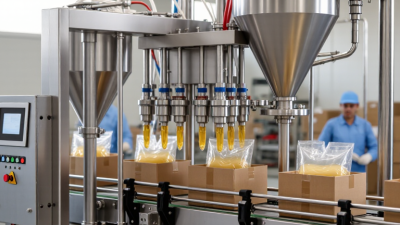
Filling precision is a practical test of equipment quality, not just a figure on a brochure. A reliable bag-in-box filler should maintain dosing accuracy within ±1% across repeated cycles. This target matters when packaging sauces, beverages, oils, or other costly liquids. Even a small overfill can increase product loss across thousands of bags. Underfilling creates customer complaints and weakens process control. Both problems are expensive.
Evaluation should include gravimetric testing with calibrated scales, not visual checks alone. Test samples at the beginning, middle, and end of a production run. Record product temperature, viscosity, filling speed, and bag size. These details can change results. Experienced technicians also inspect valves, nozzles, seals, and air pressure. A clean nozzle can prevent dripping after filling. That sounds simple. It is often overlooked. No machine is perfect, and operators may adjust settings too quickly. That habit can hide unstable performance.
Tips: Request accuracy data from real production trials, preferably with your product. Ask how suppliers measure the ±1% claim and how often instruments are calibrated. Check product loss during changeovers and nozzle purging. A supplier that explains test limits openly is easier to trust. Still, one trial is not enough. Run several batches, review the variance, and question results that look unusually perfect.
Automation Benchmarks: PLC Control, Vision Inspection, and 85%+ OEE
2026 Top Bag in Box Packaging Equipment Suppliers
For 2026, serious bag-in-box equipment selection starts with measurable automation. Deloitte’s 2024 Smart Manufacturing Survey found that 86% of manufacturers expect smart operations to drive competitiveness within five years. That pressure reaches filling, sealing, and case packing lines.
PLC control should record recipe changes, cycle times, alarms, and downtime reasons. Operators need a clear screen, not a maze of menus. Vision inspection can check spouts, seals, print quality, and carton alignment at line speed. The International Federation of Robotics reported 541,302 industrial robots installed worldwide in 2023, showing how quickly automated production is expanding.
85%+ OEE is a useful benchmark, not a guaranteed result. OEE combines availability, performance, and quality, so one weak factor can expose the real problem. A line may run fast while losing hours through short stops and film changes. That detail is easy to miss. Equipment suppliers should provide logged trial data, reject rates, changeover times, and maintenance records. Claims without timestamps deserve caution.
In practical audits, inspect the vision camera near the sealing station. Look for stable lighting, reject confirmation, and protected data storage. Ask whether the PLC can export downtime data to existing systems. PMMI research consistently identifies integration, labor efficiency, and flexible automation as major packaging priorities. Still, 85% OEE may be unrealistic during frequent format changes. The honest benchmark depends on product variety, staffing, materials, and cleaning requirements.
Supplier Compliance: FDA 21 CFR, EU 1935/2004, and CE Certification
When evaluating bag-in-box packaging equipment suppliers in 2026, compliance should be checked before output speed or automation features.
Equipment may contact liquid through filling nozzles, seals, tubing, valves, or stainless-steel surfaces. Each material needs documented suitability for its intended food-contact conditions.
FDA 21 CFR references are useful, but they do not automatically certify an entire machine. The supplier should identify applicable sections, temperature limits, and product-contact restrictions.
EU Regulation 1935/2004 requires food-contact materials to avoid transferring harmful substances or changing taste, odor, and composition. Ask for declarations of compliance, material specifications, and traceability records.
A practical audit can include checking hose markings, gasket certificates, weld quality, and cleaning instructions. Records matter. Missing batch information can slow an investigation.
CE certification concerns applicable European safety requirements for machinery, electrical systems, guarding, and control functions. It is separate from food-contact compliance. Request the EU Declaration of Conformity, risk assessment, technical documentation, and operating instructions. Review emergency stops and access doors during a factory acceptance test.
I have seen impressive machines lose credibility when documents arrived late or used generic wording. That gap matters. Suppliers should also explain validation methods, change-control procedures, and how replacement parts maintain the original compliance status. Still, certificates can become outdated, and local interpretation may differ.
A careful buyer verifies the evidence, not just the logo.