
2026 Top Fruit and Vegetable Processing Trends?

2026 Top Fruit and Vegetable Processing Trends?

The 2026 outlook for fruit and vegetable processing is being shaped by waste reduction, nutrition, automation, and climate pressure. The opportunity is practical. A bruised mango, uneven carrot, or surplus tomato can still become a valuable product.

FAO’s The State of Food and Agriculture reports that 13.2% of food is lost between harvest and retail globally. The UNEP Food Waste Index Report 2024 adds a sharper warning. Households, food services, and retailers wasted about 1.05 billion tonnes of food in 2022. These figures support stronger demand for freezing, drying, pulping, fermenting, and aseptic packaging. They also expose an uncomfortable weakness. Processing cannot solve poor harvesting, weak cold chains, or careless distribution alone.

Dr. R. Paul Singh, a respected food process engineer, has expressed the field’s core responsibility clearly: “Food processing must protect the quality of the raw material.” That principle will guide the leading 2026 trends. Expect sensor-based grading, artificial intelligence for defect detection, lower-temperature preservation, water-efficient cleaning, and upcycled ingredients from peels and stems. Plant-based convenience will continue growing, but consumers may question long ingredient lists and excessive processing.

The evidence is promising, not perfect. Technology can reduce losses, yet it can also increase energy use and packaging waste. This article examines where fruit and vegetable processing is genuinely improving efficiency, nutrition, and shelf life—and where the industry still needs better measurement.
2026 Top Fruit and Vegetable Processing Trends?

Global Drivers Shaping Fruit and Vegetable Processing in 2026

Global Drivers Shaping Fruit and Vegetable Processing in 2026

Climate volatility is reshaping fruit and vegetable processing more than fashion-driven demand. Drought, heat, and irregular rainfall are changing size, sweetness, texture, and harvest timing. The FAO Food Loss Index reports that 13.2% of food was lost globally between harvest and retail in 2021. That figure turns bruised tomatoes, soft berries, and delayed trucks into measurable margin pressure. Processors are adopting optical sorting, flexible recipes, and smaller thermal loads. Yet many plants still measure yield after production, not during washing, cutting, and heating.

Energy and water will influence investment decisions. Agriculture already accounts for about 70% of global freshwater withdrawals, according to UN-Water. Processing sites are therefore testing closed-loop rinsing, membrane filtration, heat recovery, and low-temperature drying. These systems can reduce resource use, but they require careful maintenance and trained operators. The UNEP Food Waste Index Report 2024 estimates that 1.05 billion tonnes of food were wasted in 2022. Households generated 60% of that waste. Processors can respond by converting peels, pulp, and imperfect produce into purees, fibers, powders, or permitted feed ingredients.

Convenience will continue driving diced, frozen, blended, and ready-to-cook formats. Sensors and process data can improve color retention and reduce over-processing. Artificial intelligence may help predict quality losses, but poor data can create confident mistakes. Traceability must connect farms, transport, storage, and factory records. The uncomfortable question remains practical: can smaller facilities afford this transition without increasing product prices?

Advanced Technologies Transforming Processing Efficiency and Quality

2026 Top Fruit and Vegetable Processing Trends

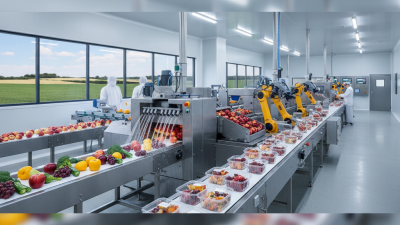
Advanced technologies are reshaping how processors protect freshness, control waste, and maintain consistent quality. Machine vision systems now inspect color, size, bruising, and surface defects in milliseconds. Hyperspectral sensors can detect internal moisture changes before damage becomes visible. This helps operators adjust cutting, drying, or cooling settings earlier.

Automation is becoming more responsive. Robotic sorting and gentle handling equipment reduce pressure marks on soft fruit and leafy vegetables. Digital twins can model production lines, helping engineers test temperature, speed, and airflow changes without interrupting operations. Predictive maintenance also uses vibration and energy data to identify worn bearings or unstable motors. Downtime becomes less surprising.

Water and energy efficiency remain practical priorities. Closed-loop washing systems can filter and reuse process water, while smart heat controls limit unnecessary steam use. However, advanced equipment is not automatically efficient. Poor sensor calibration can create false rejects, and complex software may confuse staff during busy shifts. Human inspection still matters. Reliable results require regular validation, clear training, and records that trace each adjustment from incoming produce to final packaging.

2026 Top Fruit and Vegetable Processing Trends

Advanced technologies transforming processing efficiency and quality

The chart presents representative midpoints of commonly reported industry ranges for potential operational improvements. AI vision sorting, high-pressure processing, pulsed electric fields, hyperspectral inspection, and connected equipment monitoring are helping processors reduce waste, extend freshness, lower energy use, and improve production reliability. Actual results vary by product, equipment configuration, and operating conditions.

Sustainable Practices in Water, Energy, Packaging, and Waste Management

2026 Top Fruit and Vegetable Processing Trends?

Water, energy, packaging, and waste management are becoming linked production decisions. FAO reports that agriculture uses about 70% of global freshwater withdrawals. Processing plants can respond with counter-current washing, membrane filtration, and measured reuse. Clean-in-place systems should track litres per tonne, not only total consumption. Small sensors can reveal leaking valves, overfilled tanks, and unnecessary rinsing.

Energy efficiency is equally practical. Heat recovery from blanching water can preheat incoming process water. Variable-speed motors can reduce electricity use during lower-throughput periods. The International Energy Agency highlights efficiency as a major pathway for reducing industrial energy demand. However, electrification is not automatically sustainable when local grids remain carbon-intensive. Each facility needs verified energy and emissions data.

Packaging remains difficult. UNEP’s Turning off the Tap report identifies packaging as the largest plastics-use sector, representing roughly 40% of plastic demand. Lightweight formats, recycled content, and mono-material designs may reduce impacts, but barrier performance still matters. Failed packs create food waste. That trade-off deserves more testing. UNEP’s Food Waste Index Report 2024 estimates that 1.05 billion tonnes of food were wasted in 2022. Peels, pulp, and rejected produce should enter animal-feed, ingredient, composting, or anaerobic-digestion pathways where regulations and safety controls allow. Yet no single solution fits every crop. Seasonal volumes, contamination, and transport distances can change the result.

New Product Formats, Ingredients, and Nutrition-Focused Innovations

In 2026, fruit and vegetable processing is moving beyond cans, juices, and frozen packs. New formats are making produce easier to use.

Freeze-dried fruit pieces can add color and crunch to cereals, snacks, and yogurt.

Vegetable purees now support sauces, soups, filled pasta, and ready-to-eat meals.

Powdered beetroot, carrot, spinach, and pumpkin also offer practical nutrition in small portions.

Ingredients are becoming more functional, but claims need discipline.

Naturally occurring fiber from citrus peel, apple pomace, and vegetable pulp can improve texture and support digestive health. Fermented vegetables may deliver distinctive flavors, although their nutrition and safety profiles require careful testing.

Reduced-sugar fruit spreads are using concentrated fruit, soluble fibers, and controlled acidity instead of relying only on sweeteners.

Texture still matters. Consumers notice dryness, grit, and weak flavor quickly.

Nutrition-focused development now includes protein pairing, mineral retention, and gentler heat treatment.

Processing teams can monitor pH, water activity, vitamin losses, and microbial stability during product trials.

These measurements create more reliable decisions than attractive packaging claims.

Yet no process preserves everything. Some vitamin C may decline, while fiber can remain useful.

I have seen promising prototypes fail because they ignored serving size or everyday convenience.

Better products should be tested in real kitchens, not only laboratories.

Data must lead.

Market Impacts, Safety Standards, and Future Industry Directions

In 2026, fruit and vegetable processors will face sharper market pressure from waste, energy costs, and safety expectations. FAO data estimates that 13.2% of food is lost before retail. This makes damaged carrots, soft berries, and irregular tomatoes valuable processing inputs. Peels and pulp can also support fiber-rich ingredients, animal feed, or compost systems. Yet these uses require reliable separation controls. Otherwise, efficiency becomes another contamination risk.

Safety standards are becoming more data-driven. The WHO estimates that contaminated food causes about 600 million illnesses annually. Processors therefore need validated washing, thermal treatment, allergen controls, and cold-chain monitoring. Codex General Principles of Food Hygiene, revised in 2022, continues to emphasize HACCP-based prevention. In practice, sensors should record water temperature, product time, and storage conditions. A paper checklist alone is not enough. It can miss a failed valve at 3 a.m.

Future investment will likely favor flexible lines, traceable batches, and lower-water technologies. The UNEP Food Waste Index Report 2024 estimated 1.05 billion tonnes of food waste in 2022. This supports stronger demand for shelf-stable purées, frozen cuts, and minimally processed products. However, digital traceability remains expensive for smaller facilities. I may be too optimistic about rapid adoption. Training gaps, unstable power, and inconsistent supplier records could slow progress. Processors should test improvements on one line first, measure failures honestly, and scale only after results remain reliable.

2026 Top Fruit and Vegetable Processing Trends? - Market Impacts, Safety Standards, and Future Industry Directions

Trend / Processing Area Relevant 2026 Data Point Market Impact Food-Safety and Compliance Focus Likely Industry Direction Evidence / Reference
High-pressure processing and other non-thermal methods Commercial high-pressure processing commonly operates around 400–600 MPa and is used to extend refrigerated shelf life while limiting heat damage. Supports premium chilled juices, fruit preparations, guacamole-style products, and minimally processed vegetables; may reduce the need for some chemical preservatives. Process validation, pressure-equipment safety, cold-chain control, and verification against relevant pathogens remain essential. Greater use of validated non-thermal treatments for products where fresh flavor, color, and nutrient retention support higher margins. FDA; Codex General Principles of Food Hygiene and HACCP guidance
Automation, machine vision, and artificial intelligence Optical sorting can assess color, size, shape, and visible defects at production-line speed; actual accuracy varies by crop, camera system, and operating conditions. Improves grading consistency, reduces manual inspection pressure, and can redirect borderline produce toward purees, frozen products, or dried ingredients. Digital systems must be calibrated, documented, access-controlled, and supported by human verification and corrective-action records. Processors will combine vision inspection with predictive maintenance, yield analytics, and real-time process monitoring. FAO food-loss reduction guidance; Codex HACCP principles
Upcycling and by-product valorization FAO estimates that approximately 13% of food is lost globally between post-harvest and retail, while UNEP estimates that 19% of food available to consumers is wasted at retail, food service, and household levels. Creates additional revenue streams from peels, seeds, pulp, stems, and cosmetically imperfect produce while improving raw-material utilization. New ingredients require hazard assessment, allergen review, contaminant controls, validated drying or extraction processes, and accurate labeling. More processors will design facilities around multiple outputs instead of treating side streams solely as waste. FAO, Food Loss Index; UNEP, Food Waste Index Report 2024
Frozen, chilled, and minimally processed formats Freezing remains a practical preservation method because it substantially slows microbial growth when the product is maintained at approximately −18°C or colder throughout storage and distribution. Supports convenience, year-round availability, portion control, and reduced dependence on short seasonal harvest windows. Temperature monitoring, hygienic handling before freezing, thawing controls, and prevention of cross-contamination are critical. Growth is expected in ready-to-cook vegetables, frozen fruit ingredients, and products combining convenience with clean-label positioning. Codex Code of Practice for the Processing and Handling of Quick Frozen Foods
Traceability and digital supply-chain records U.S. FDA Food Traceability Rule requirements are organized around Key Data Elements and Critical Tracking Events; the compliance date has been established as July 20, 2028. Encourages standardized lot identification, faster recalls, stronger supplier oversight, and more reliable origin and processing records. Records should cover harvesting, receiving, transformation, shipping, and traceability-plan maintenance where applicable. 2026 is likely to be an implementation-preparation year, with more investment in interoperable data systems and supplier data quality. U.S. FDA, Food Traceability Final Rule
Microbial risk management and environmental monitoring Fresh-cut produce is particularly vulnerable because cutting releases nutrients and moisture; Salmonella, pathogenic Escherichia coli, and Listeria monocytogenes remain key hazards depending on the product and facility. Higher compliance expectations favor facilities with hygienic zoning, validated sanitation, rapid testing capability, and strong preventive controls. Environmental monitoring, water-quality management, sanitation verification, employee hygiene, and documented corrective actions are central controls. Processors will move from end-product testing alone toward risk-based preventive systems supported by trend analysis. U.S. FDA Produce Safety Rule; Codex General Principles of Food Hygiene
Water, energy, and packaging efficiency Fruit and vegetable processing uses significant water for washing, cooling, sanitation, and equipment cleaning; energy demand is also material in freezing, drying, refrigeration, and cold storage. Efficiency projects can reduce operating costs, exposure to water scarcity, and waste-treatment loads while improving environmental reporting. Water reuse requires validated treatment and monitoring so that efficiency measures do not introduce microbial or chemical hazards. More facilities will adopt closed-loop water systems, heat recovery, lightweight packaging, and measurable resource-intensity targets. FAO water and food-loss guidance; ISO 22000 and environmental-management practices
Climate-resilient sourcing and flexible formulations Heat, drought, flooding, and changing pest pressure can affect crop yield, size, maturity, sugar-acid balance, and processing quality from season to season. Raises the value of multi-origin sourcing, contract flexibility, crop diversification, and formulations that tolerate normal raw-material variation. Supplier approval, pesticide-residue compliance, mycotoxin controls where relevant, and identity-preserved records require closer monitoring. The sector is likely to prioritize resilient procurement networks, improved forecasting, and processing specifications based on measurable quality ranges. IPCC climate-impact assessments; FAO food-systems and crop-loss resources

Note: The figures and regulatory dates above are based on publicly available international food-safety, food-loss, and regulatory references. Market impacts are industry outlook assessments for 2026 rather than company-specific forecasts.