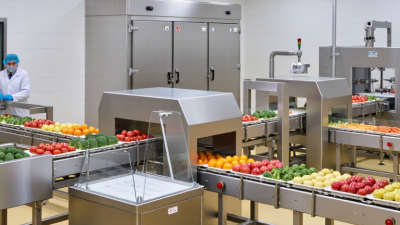

Top Fruit and Vegetable Processing Equipment Suppliers
Choosing the right fruit and vegetable processing equipment supplier can shape an entire production line. It affects hygiene, yield, labor costs, product quality, and long-term reliability. A polished brochure is not enough. Real performance matters.
This guide examines leading suppliers across washing, sorting, peeling, cutting, blanching, drying, freezing, and packaging systems. It considers practical factory needs, including throughput, floor space, water use, energy demand, and cleaning access. An experienced supplier should explain how equipment performs with delicate berries, firm root vegetables, leafy greens, and irregular produce. Those details often reveal more than a sales presentation.
Look closely at engineering support, installation training, spare-parts availability, and response times. Ask whether the supplier can provide trials using your actual produce. A carrot line and a strawberry line rarely behave the same way. Small differences in moisture, size, and maturity can change results.
Testing matters.
Reliable suppliers document food-contact materials, sanitation procedures, safety features, and quality controls. Independent certifications may support credibility, but they should not replace direct verification. References from comparable processing plants can offer useful evidence. Still, every factory has different conditions.
Some rankings simplify complex decisions. That is a weakness worth admitting. The lowest purchase price may create higher maintenance costs later. Conversely, the most advanced system may exceed a smaller processor’s needs. This overview therefore focuses on balanced evaluation, practical experience, technical competence, and transparent supplier support. It aims to help buyers compare options carefully, reduce avoidable risks, and choose equipment that fits real production demands.
Fruit and Vegetable Processing Equipment: Scope and FAO’s 13.2% Food-Loss Estimate
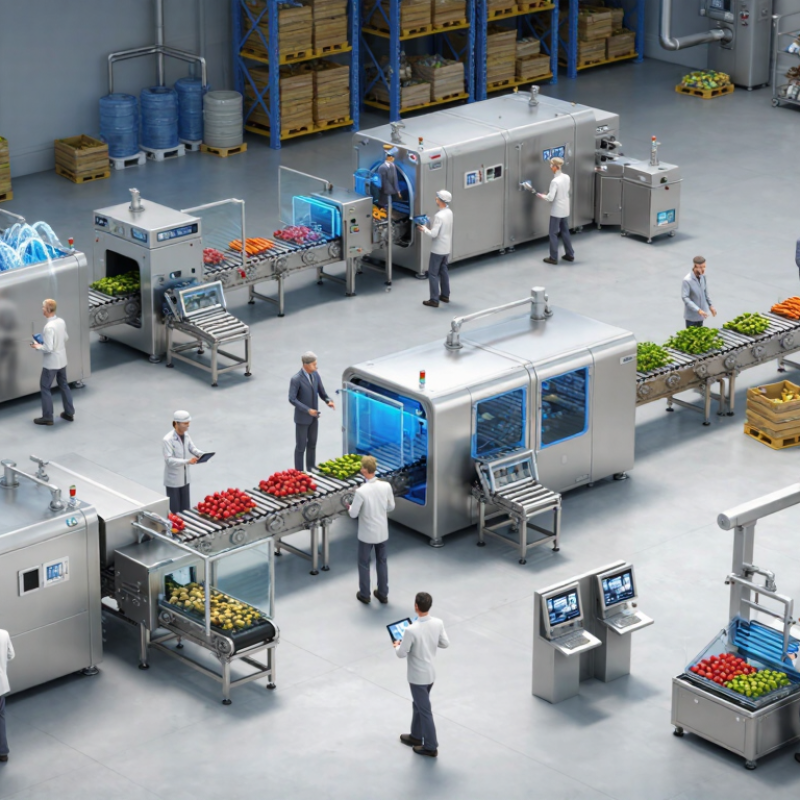
Fruit and vegetable processing equipment covers washing, grading, cutting, blanching, drying, freezing, and controlled packing. Its purpose is not only speed. Proper equipment protects texture, safety, weight, and market value during handling. FAO has estimated that 13.2% of food is lost globally between harvest and retail, excluding the retail stage. This figure shows why processing decisions matter.
Losses often begin with bruised crates, delayed cooling, or uneven sorting. A well-designed washing line can remove soil without damaging delicate skins. Optical grading systems can identify color defects, while gentle conveyors reduce drops and compression. Cold rooms, moisture controls, and accurate weighing systems also help maintain quality. Suppliers should explain throughput, cleaning requirements, spare parts, energy use, and staff training. A polished machine is not enough.
Conditions vary sharply between farms and factories. A dryer that performs well in a humid plant may waste energy elsewhere. This is where practical testing becomes essential. Operators should measure rejected produce, water use, downtime, and product weight before and after installation. The 13.2% estimate is a global reference, not a promise that one machine can solve every loss. Sometimes poor scheduling causes more waste than outdated equipment. That is uncomfortable, but worth examining.
Core Equipment Stages: Washing, Sorting, Cutting, Blanching, and Freezing
Reliable fruit and vegetable processing begins with equipment that respects the raw material. Suppliers should explain how washing systems remove soil without bruising delicate produce. In practice, adjustable spray pressure, food-grade contact surfaces, and easy drainage matter more than impressive output claims. A clean water loop can reduce waste, but it needs regular monitoring. Water quality changes. Sorting follows. Optical cameras can identify color defects, while manual inspection still catches unusual shapes. Operators need clear controls and enough lighting. Small errors here can spread through every later stage.
Cutting equipment must match the crop and the final product. Uniform cubes, strips, or slices support even blanching and freezing. Sharp blades reduce tearing, yet they require disciplined adjustment and replacement. Blanching then uses controlled heat to slow enzyme activity and preserve color. Time and temperature are not interchangeable. Peas, carrots, and leafy vegetables often need different settings. Suppliers with process trials can help establish practical parameters before installation. Ask for records showing temperature stability, sanitation access, and changeover time. One overlooked detail is condensation around doors. It can create cleaning problems.
Freezing should remove heat quickly, forming small ice crystals and limiting texture damage. Airflow, belt loading, and product thickness all affect the result. A capable supplier will discuss energy use, maintenance access, spare parts, and operator training. Do not judge a freezer by capacity alone. An efficient line can still underperform when loading is uneven. That happened during one trial I observed. The outer pieces froze first. Adjustments improved consistency, but the test exposed a weak assumption. Real produce rarely behaves like a catalog sample. Choose equipment around measured crop variation, cleaning routines, and the staff who will run it.
Top Fruit and Vegetable Processing Equipment Suppliers
Core Equipment Stages: Washing, Sorting, Cutting, Blanching, and Freezing
The chart compares common commercial throughput bands for major fruit and vegetable processing stages. Actual capacity depends on product type, cut size, moisture content, automation level, and required processing quality. The figures are general industry reference ranges and are not associated with any specific company or brand.
Top Supplier Categories by Capacity, Automation, Yield, and Energy Use
Top Fruit and Vegetable Processing Equipment Suppliers
Supplier categories become clearer when capacity is measured with yield and energy use. Small processors often need modular washers, cutters, and batch blenders below 5 tonnes per hour. Mid-sized plants usually require continuous lines from 5 to 20 tonnes per hour. Large facilities may exceed 20 tonnes per hour, but bigger equipment is not automatically better.
FAO’s 2019 State of Food and Agriculture reported that 14% of food is lost between harvest and retail. Poor grading, bruising, and delayed cooling remain practical causes.
Automation separates equipment suppliers more sharply. Semi-automatic systems suit variable crops and frequent product changes. Fully automated lines offer consistent sorting, dosing, and cleaning records. Computer vision can reduce manual inspection, yet it needs reliable lighting and disciplined calibration.
A neglected sensor can damage yield quietly. The best supplier should provide tested throughput figures, not only attractive catalog numbers.
Energy-focused suppliers emphasize efficient pumps, heat recovery, variable-speed drives, and low-water cleaning. The International Energy Agency identifies motor-driven systems as a major share of global electricity demand, making pump and conveyor selection important.
Yield claims also need site trials. A report may show 92% recovery under ideal conditions, while soft berries, irregular roots, or cold rooms produce less.
Ask for data by crop, moisture level, operating speed, and rejected weight. That detail is less glamorous, but far more useful.
Food-Safety Compliance: HACCP’s Seven Principles, FDA FSMA, and CE Marking
Top Fruit and Vegetable Processing Equipment Suppliers
Food safety must shape equipment selection, not follow it. WHO reports that contaminated food causes about 600 million illnesses and 420,000 deaths yearly. Suppliers should support HACCP’s seven principles with hygienic design, traceable controls, and documented corrective actions. Equipment teams need hazard analysis, critical limits, monitoring records, verification, and validation. Small gaps matter.
FDA FSMA requires preventive controls for many U.S.-bound food operations. Processing lines should limit allergen cross-contact, microbial growth, and foreign-material risks. Stainless steel contact surfaces, cleanable frames, sealed bearings, and tool-free access can reduce sanitation failures. CE marking confirms applicable European conformity requirements, but it is not a food-safety certificate.
Buyers should request the Declaration of Conformity, technical file details, and machinery risk assessment. The European Commission’s Blue Guide explains that CE responsibilities remain with the manufacturer or importer.
Tips: Ask suppliers for sanitation procedures, HACCP support records, and validation evidence. Check whether temperature sensors are calibrated. Confirm that wash water, belts, blades, and drainage areas are easy to inspect. PMMI industry guidance repeatedly identifies automation, traceability, and hygienic design as major processing priorities. Still, automation cannot repair weak training. A perfect machine can fail through poor cleaning records, rushed changeovers, or unclear ownership. Teams should audit these practical weaknesses before approving the line.
Supplier Selection Metrics: Throughput, OEE, CIP, Warranty, and Service Coverage
Top Fruit and Vegetable Processing Equipment Suppliers
Supplier selection should begin with measurable output, not catalog size. Throughput must match seasonal peaks, raw material variability, and planned cleaning time. The FAO estimates that 13.2% of food is lost between harvest and retail, making gentle, stable processing especially important. Ask suppliers for tested capacity using similar produce, not ideal laboratory samples.
OEE exposes hidden losses. Industry benchmark reports commonly place world-class OEE near 85%, while many plants operate much lower. Treat that figure carefully. A high rate can hide quality rejects or long changeovers.
Request records for availability, performance, and quality separately. PMMI’s food-processing automation research also highlights labor availability and equipment integration as major investment pressures. Controls should support clear downtime coding.
CIP performance needs equal attention.
Review cleaning duration, water demand, chemical concentration, temperature, and microbiological verification. A short cycle is not automatically a safe cycle. The U.S. Environmental Protection Agency reports that industrial facilities can reduce water use through process optimization and reuse, but savings depend on validated controls.
Warranty terms should cover labor, travel, critical sensors, and software support. Service coverage matters during harvest. Ask for response-time commitments, local technicians, spare-parts inventory, and remote diagnostics. I would also request a reference visit. Data sheets rarely reveal sticky pulp, blocked nozzles, or repeated calibration failures.
Related Posts
-
China Top Fruit and Vegetable Processing Suppliers?
-
What is a Bag in Box Filling Machine and Its Benefits?
-
China Best Pouch Up Bag Manufacturer for Wholesale?
-
Why You Should Consider a Bag in Box Machine for Your Business?
-
2025 Top 10 Bag in Box Machines for Efficient Packaging Solutions
-
2025 Guide: How to Choose the Right Vegetable Processing Machine for Your Needs