Top 10 Vegetable Processing Equipment Manufacturers Worldwide
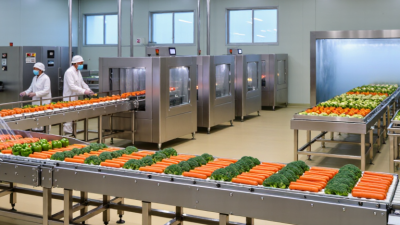
Vegetable processing turns freshly harvested crops into safe, consistent products for retail, food service, and industrial use. The equipment behind that work can include soil-removal washers, inspection conveyors, peelers, slicers, blanchers, dryers, and packaging lines. Each stage affects product quality. A poorly matched cutter, for example, may bruise delicate leaves or produce uneven pieces that cook inconsistently.
This guide introduces 10 vegetable processing equipment manufacturers serving markets worldwide. It considers practical factors such as equipment range, production capacity, hygienic design, automation options, and support after installation. A stainless-steel washer with adjustable spray pressure may suit one facility, while another needs a complete line that links sorting, cutting, and packing. Small details matter.
No ranking can capture every plant’s reality. A supplier’s best-known machinery may not fit a buyer’s crop, budget, building layout, or desired output. Company capabilities and product offerings can also change, so readers should verify current specifications, references, and service coverage before making decisions. That takes time. It is still worth doing. The following overview offers a starting point for comparing manufacturers, not a substitute for technical assessment or product trials. Even a polished brochure cannot show how a machine handles a wet, uneven batch on a busy production day.
Vegetable Processing Lines: Washing, Peeling, Cutting, Blanching, and Freezing
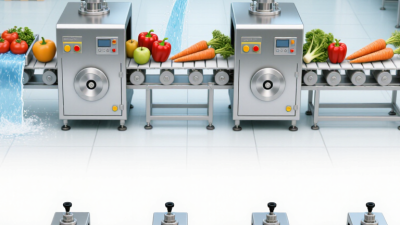
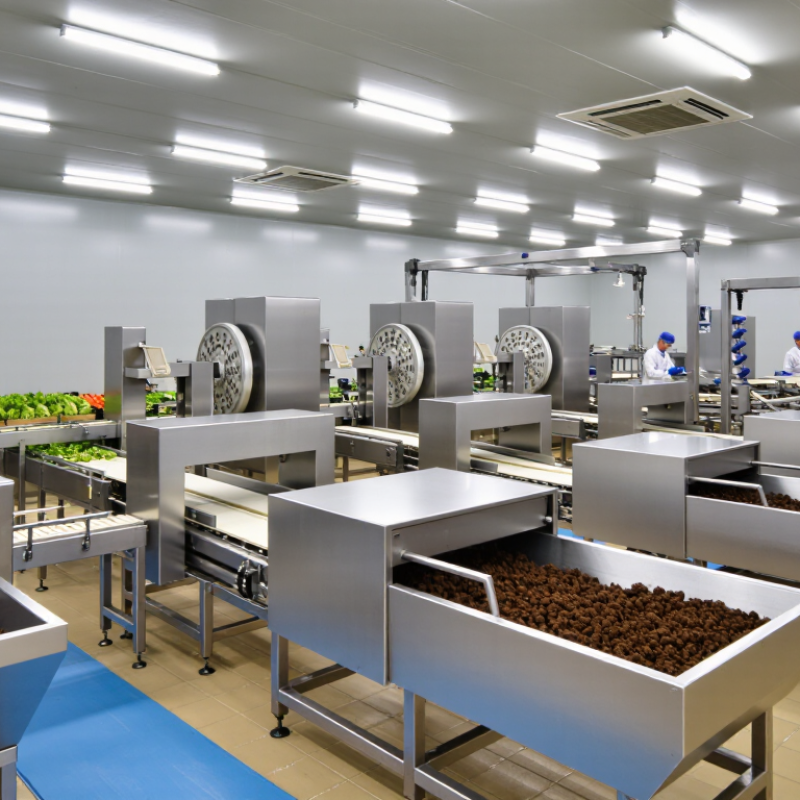
Vegetable processing lines work best when each stage is matched to the crop and its condition. Washing systems remove soil with controlled water flow, spray pressure, and suitable agitation. Leafy greens need gentler handling than firm root vegetables. A clear discharge does not always mean the produce is clean, so operators should check samples and clean the equipment regularly.
Peeling and cutting require similar attention to product variation. Abrasive or blade-based peelers can reduce labor, but excessive peeling wastes edible material. Keep blades sharp and inspect cut samples for uneven sizes. It matters. Uniform pieces heat and freeze more consistently. Still, natural differences in vegetable shape make perfect uniformity unrealistic.
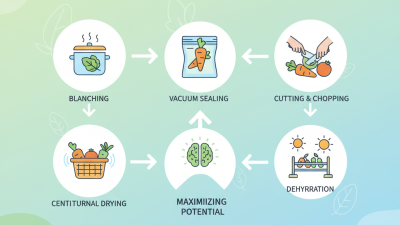
Blanching uses controlled heat to slow enzyme activity before freezing. Time and temperature depend on the vegetable and cut size; underprocessing can affect quality, while excess heat softens texture. Freezing equipment should remove heat promptly and keep product moving without crushing it. Even a well-planned line involves compromises between speed, yield, and gentle handling. Those settings deserve review when crops change, not just when a problem appears.
Capacity Metrics: Comparing Equipment Throughput in Tonnes per Hour
Comparing vegetable processing equipment by tonnes per hour sounds straightforward, but the number needs context. A washer rated at 10 tonnes per hour may handle leafy greens differently from potatoes. Crop size, soil load, water temperature, and feed consistency all affect sustained output. Ask whether a stated capacity is a peak rating or a measured operating rate. Numbers need context.
A useful comparison follows the product through the line: washing, peeling, cutting, blanching, and packing. If a cutter handles 8 tonnes per hour but the washer supplies only 5, the line’s practical throughput is closer to 5. The bottleneck matters. Request test data for the intended crop, cut size, and operating hours, then compare usable output rather than nominal feed rate. For example, a trial processing 40 tonnes over an eight-hour shift averages 5 tonnes per hour, including normal stoppages if they are recorded. That figure may be less flattering than a short demonstration, yet it better reflects production conditions. Even careful comparisons can miss seasonal variation in moisture, size, and incoming quality. A small gap between quoted and observed capacity deserves investigation, not dismissal.
Blanching Technology: Typical Operating Temperatures of 90–100°C
Blanching at 90–100°C is common in vegetable processing, but temperature alone does not define the treatment. Line operators also control residence time, product size, and belt loading. A 10°C difference can change enzyme inactivation and soften thin-cut vegetables faster. Keep it measurable.
Fellows’ Food Processing Technology: Principles and Practice (4th edition, 2017) describes blanching as a heat treatment used to inactivate enzymes before freezing or drying. The reference emphasizes that time and temperature depend on the food and process. In practice, processors should validate each product’s schedule rather than apply one setting to every vegetable. A probe near the coldest product zone can reveal uneven heating that the tank display may miss.
The USDA National Center for Home Food Preservation publishes vegetable-specific blanching times for freezing, illustrating why schedules vary by crop and preparation. Industrial equipment should therefore provide steady water or steam contact, adjustable belt speed, and rapid cooling after heating. Check pieces from the center of the load, not only those near the surface. One weak point remains: crowded belts can create uneven exposure, even when the control panel shows 95°C. Temperature records help, but they cannot replace product checks.
Top 10 Vegetable Processing Equipment Manufacturers Worldwide - Blanching Technology: Typical Operating Temperatures of 90–100°C
| No. |
Vegetable |
Typical blanching equipment |
Typical operating temperature |
Indicative residence time |
Key process consideration |
| 1 |
Green peas |
Continuous hot-water or steam belt blancher |
95–100°C |
1.5–3 minutes |
Use gentle conveying to limit skin damage; cool promptly after blanching. |
| 2 |
Green beans |
Mesh-belt hot-water blancher |
95–100°C |
2–4 minutes |
Keep bean size and feed depth consistent for even heat treatment. |
| 3 |
Broccoli florets |
Steam or hot-water belt blancher |
95–100°C |
2–3 minutes |
Uniform floret size helps reduce differences in heating and texture. |
| 4 |
Carrot slices |
Continuous hot-water blancher |
95–100°C |
2–4 minutes |
Residence time varies with slice thickness and the desired firmness. |
| 5 |
Spinach leaves |
Short-residence steam or hot-water blancher |
95–100°C |
1–2 minutes |
Process gently to minimize leaf compaction and excessive softening. |
| 6 |
Cauliflower florets |
Hot-water or steam belt blancher |
95–100°C |
3–5 minutes |
Floret dimensions and stem thickness affect heat penetration. |
| 7 |
Sweet corn kernels |
Continuous hot-water blancher |
95–100°C |
3–5 minutes |
Control product loading to maintain consistent water contact and temperature. |
| 8 |
Asparagus spears |
Steam or hot-water belt blancher |
95–100°C |
2–4 minutes |
Sort by spear diameter where practical to improve treatment uniformity. |
| 9 |
Diced potatoes |
Continuous hot-water blancher |
95–100°C |
3–5 minutes |
Cube size and intended downstream use influence the required treatment. |
| 10 |
Brussels sprouts |
Hot-water or steam blancher |
95–100°C |
3–5 minutes |
Whole-product size and core heating are important process controls. |
Note: These are indicative processing ranges, not fixed operating specifications or a manufacturer ranking. Actual blanching time depends on variety, product size, maturity, loading rate, equipment design, and the required product quality. Validate settings for the specific process, then cool the product promptly.
Hygienic Design: Food-Contact Surfaces in 304 and 316 Stainless Steel
On a vegetable processing line, food-contact surfaces face water, plant acids, soil, and repeated cleaning. Grade 304 stainless steel is commonly used for equipment surfaces because it offers good corrosion resistance in many food-processing conditions. Grade 316 contains molybdenum, which can improve resistance to chloride-related corrosion. It may be worth considering where salt or aggressive cleaning chemicals are present. The right choice depends on the actual process, not the grade number alone.
Small details matter. Smooth, continuous welds and rounded transitions leave fewer places for vegetable fibers and moisture to collect. Deep scratches, gaps, and poorly finished joints can make cleaning harder. A polished surface helps, but it does not compensate for a design that traps debris. Operators should be able to see, reach, and inspect product-contact areas without dismantling half the machine. That sounds obvious. It is often overlooked.
When comparing equipment, ask how surfaces are finished and how welds are inspected. Confirm that the proposed steel grade suits the ingredients, water quality, and cleaning routine. Cleaning procedures should be checked under real operating conditions, since equipment geometry affects how well residues are removed. There is a trade-off: specifying 316 everywhere may add cost without solving poor drainage or inaccessible corners. A practical review of drawings, sample welds, and cleaning access can reveal issues before installation.
Ten Global Manufacturers Compared by Technology, Capacity, and Service Reach
Comparing ten global vegetable-processing equipment manufacturers works best when the same production needs are applied to each. Look beyond headline capacity. Ask whether a line can wash, peel, cut, blanch, or freeze vegetables at your required rate, and request output figures for your actual crop and cut size. A machine rated for 2,000 kilograms per hour may perform differently with leafy greens than with firm root vegetables. Details matter.
Technology is only one part of the comparison. Check changeover time, water and energy use, cleaning access, control-system compatibility, and the availability of wear parts. Service reach matters when a stopped conveyor can delay an entire shift. Ask where technicians are based, how remote support works, and what typical parts lead times look like. Promises vary. Verify them in writing, and request references from comparable facilities. A weakness in our own evaluation is that published capacity figures rarely share identical testing conditions.
Tips: Bring a sample of your produce to a supplier trial. Record throughput, product damage, cleaning time, and rejected pieces. Keep the results beside the quotation. If a supplier cannot explain test conditions clearly, treat the number cautiously.
Top 10 Vegetable Processing Equipment Manufacturers Worldwide — Ten Global Manufacturers Compared by Technology, Capacity, and Service Reach
Typical commercial throughput ranges by processing stage (tonnes per hour)
These broad, indicative equipment-capacity ranges provide context for comparing manufacturers. Actual throughput depends on crop, product size, process settings, and line configuration; the ranges are not rankings or company-specific specifications.